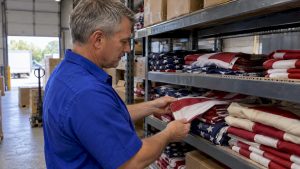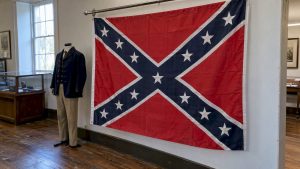


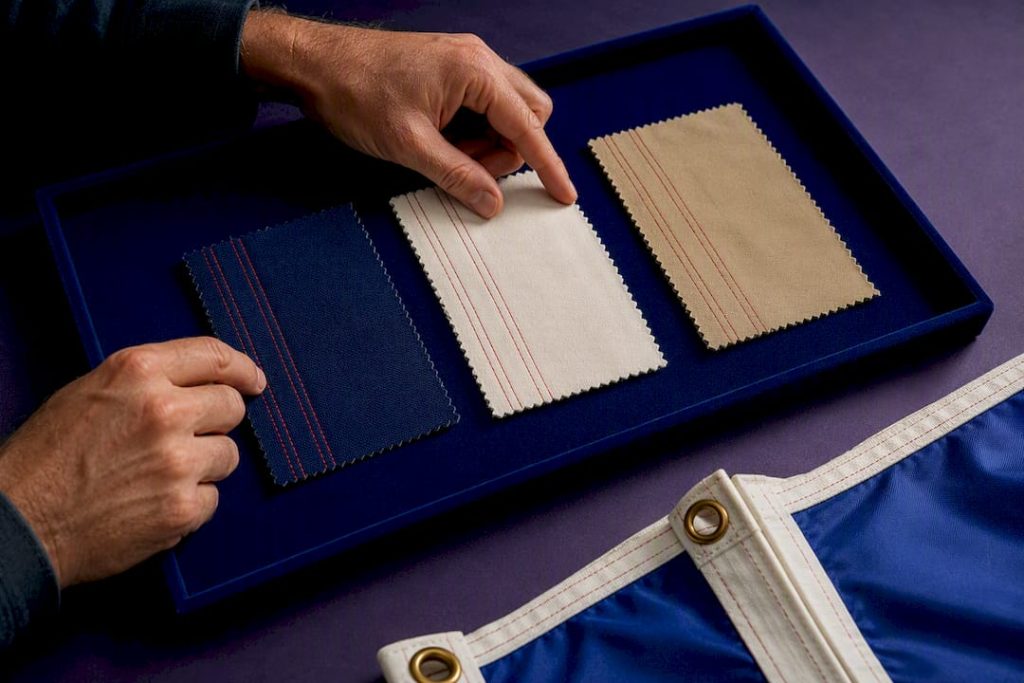
Confirm the branch or service first, then pick your size, then decide between nylon and polyester for indoor or outdoor duty. That single sequence, followed at Ultimate Flags, America’s oldest online flag store, prevents the wrong-flag headaches that plague rushed orders. Finish by locking in finishing details (grommets, sleeve, or fringe), requesting a proof if you’re customizing anything, and completing checkout with your production and shipping dates in hand.
TL;DR:
- Nylon flags are best suited for light to moderate wind conditions and offer vivid coloring, making them ideal for most home and ceremonial displays.
- Polyester flags are heavier and more resistant to fraying, which makes them suitable for high-wind areas, coastal regions, or daily flying needs.
- Matching fabric to your environment significantly extends flag lifespan, with outdoor flags in harsh climates needing more frequent replacement.
- For residential poles, a 3×5 foot flag is standard, while larger sizes like 4×6 or 5×8 are recommended for institutional or commercial poles over 25 feet.
- Ordering all service flags for a display in one transaction ensures color consistency, matching fabric weight, and dye lots across the set.
Table of Contents
- Your Military Flag Order Checklist: What to Select and When
- Nylon, Polyester, or Cotton: Which Material Actually Holds Up?
- Which Size and Finishing Fit Your Pole or Display?
- Accessories Worth Adding to Your Order
- Production Timelines, Proofs, Shipping, and Returns
- Caring for Your Flag After It Arrives
- Why Trust Ultimate Flags With Your Order
- Ready to Order Your Military or Service Flag?
- Sources
- FAQ
Your Military Flag Order Checklist: What to Select and When
Ordering a service flag isn’t complicated, but the sequence matters. Skip a step and you risk the wrong emblem, a size that swallows your pole, or a fabric that fades by July. Here’s the order that keeps you out of trouble.
- Confirm the branch and design. Army, Navy, Marine Corps, Air Force, Coast Guard, or Space Force each carries its own seal, colors, and proportions. Double-check wording or emblem requirements before adding to cart, especially for commemorative or unit-specific designs.
- Decide indoor or outdoor use. This single choice determines everything downstream, from fabric to finishing.
- Pick your size. Residential poles typically run flags in the 3×5 foot range, institutional and commercial poles call for 4×6 or 5×8, and table or casket flags follow fixed ceremonial dimensions rather than pole-based sizing.
- Choose material and finish. Nylon, polyester, and cotton each serve a different purpose, covered in detail below.
- Select finishing and accessories. Grommets, heading, sleeve, or fringe, plus any staff, stand, or case you’ll need on delivery day.
- Set quantity and request a proof if customizing. Multi-flag orders for color guard or precedence displays should ship together for consistent color and registration, a practice recommended by buying guides for military flags.
- Complete payment and save your order number, along with the estimated production and ship dates shown at checkout.
Pro Tip: If you’re building a full precedence display with multiple service flags, order the entire set in one transaction. Batching production keeps the fabric dye lots and stitching consistent across every flag, which matters more than most buyers expect when flags fly side by side.
Nylon, Polyester, or Cotton: Which Material Actually Holds Up?
Material choice is the single biggest factor in how long your flag looks presentable, and it depends far more on your climate than your budget. Buyers who choose by price alone often replace their flag twice as often as buyers who choose by wind exposure and sun intensity.
- Nylon flies beautifully in light to moderate wind and shows vivid color even on calm days, making it the standard pick for most home and ceremonial displays.
- Polyester is heavier and more resistant to fraying, which makes it the better choice for coastal properties, high-wind regions, or any flagpole that flies a flag daily rather than occasionally.
- Cotton belongs indoors or in ceremonial settings, such as presentation flags, funeral flags, or display cases, where wind and rain never enter the equation.
Matching fabric to your actual environment, not just your preference, is the biggest lever you have over flag longevity, according to guidance on outdoor flag materials. Before you check out, ask the seller about construction details that predict how the flag will age: multiple rows of lock-stitching on the fly end, a reinforced heading, and UV-rated inks that resist fading. The fly end is almost always the first place a flag fails, so that stitching detail alone tells you more about durability than the fabric name ever will.
Flag lifespan tracks directly with your local weather. A flag flown daily in a high-UV, high-wind coastal zone will wear out considerably faster than the same flag flown occasionally in a sheltered inland yard, a pattern confirmed by durability research on outdoor American flags. Know your environment before you know your fabric.
Which Size and Finishing Fit Your Pole or Display?
Getting the dimensions right the first time saves you a return and a second wait for production. Size and finishing depend entirely on how the flag will be mounted.
- Residential poles (typically 20 to 25 feet) pair well with 3×5 foot flags in nylon or polyester.
- Institutional and commercial poles (25 feet and taller) call for 4×6 or 5×8 foot flags for proportion and visibility.
- Indoor and ceremonial displays, including offices, VFW halls, and presentation settings, usually run 3×5 with a pole hem and gold fringe.
- Table and casket flags follow fixed ceremonial sizing rather than pole ratios. Casket flags are a standard 5×9.5 feet.
- Color guard sets should match size and fabric weight across every flag in the set for a uniform look when carried together.
For finishing, grommets suit any flag raised and lowered on a halyard, a sleeve fits flagpoles with a fixed arm or bracket, and a pole hem with fringe is standard for indoor presentation flags. Confirm your pole’s diameter before ordering a sleeve, since a mismatch is one of the most common return reasons.
Accessories Worth Adding to Your Order
A flag alone doesn’t finish the job. A few accessories, added at checkout rather than as an afterthought, save you a second shipping wait later.
- Poles and mounting brackets sized to match your flag’s grommets or sleeve.
- Indoor stands and staffs for presentation, funeral, or ceremonial flags.
- Storage cases to protect folded flags between uses.
- Reinforced stitching or heavier heading, worth requesting if the flag will fly continuously rather than occasionally.
- A spare flag, particularly for weddings, memorial services, or dedication ceremonies where a backup isn’t optional if something goes wrong.
Event organizers especially benefit from ordering a spare. A flag that arrives with a shipping crease or minor flaw is rarely noticeable at home, but it’s glaring at a public ceremony.
Production Timelines, Proofs, Shipping, and Returns
Once you’ve placed your military flag order, here’s what happens next.
- Stock flags ship faster than custom work, since there’s no proofing step involved.
- Custom flags require a digital proof before production begins. Confirm your file format and resolution requirements upfront, since mismatched files are the most common cause of reprints and delays.
- Rush production is often available for time-sensitive events, but confirm availability before your ceremony date, not after.
- Domestic shipments typically include tracking from the moment the order leaves the warehouse; international orders take longer and should be planned for well ahead of any deadline.
- Damaged or incorrect items should be reported immediately. A reputable retailer replaces manufacturing defects or shipping errors at no cost, so keep your order number and any packaging photos on hand.
Caring for Your Flag After It Arrives
A flag that’s ordered correctly still needs upkeep to stay presentable. Build a simple habit around it.
- Inspect monthly for fraying at the fly end, loose stitching, fading, and worn grommets or heading.
- Take it down in severe weather. Industry guidance generally points to removing flags in sustained winds above 50 mph to meaningfully extend service life.
- Clean by material. Nylon and polyester typically tolerate a gentle hand wash with mild detergent; cotton ceremonial flags should be cleaned far more conservatively, often by a specialist.
- Store folded and dry to prevent mildew and creasing between uses.
Pro Tip: Keep a spare flag on hand if your display runs full time or if an upcoming event matters. Replacing a worn flag the week before a dedication ceremony is a scramble; replacing it two months early from a shelf isn’t. This kind of forward planning is echoed in durability guidance for outdoor flags, which frames replacement as a schedule to plan, not a surprise to react to.
Why Trust Ultimate Flags With Your Order
Ultimate Flags has operated as America’s oldest online flag store, and that longevity shows in how the shop handles service and military flag orders: custom work gets real proofing, and questions get answered by people who know the difference between a Marine Corps seal and an Army seal on sight. Jonica, who has authored historical pieces on flag heritage including the origins of the battle flag, brings that same attention to detail to how this guide was built, treating precedence, fabric, and finishing as facts worth getting right rather than details to gloss over.
Custom orders here aren’t an afterthought. Dedicated support walks buyers through emblem accuracy, sizing against existing hardware, and proof approval before production starts, which matters most on ceremonial or ordered sets, where consistency across flags counts as much as the flags themselves.
Ready to Order Your Military or Service Flag?
You already know the sequence: branch, size, material, finishing, proof if needed, checkout. Ultimate Flags built its catalog around exactly that flow, with sizing options that match standard residential and institutional poles and fabric choices suited to whatever climate you’re flying in.
Browse the full military and service flag catalog to start your order, and reach out directly if you need a rush turnaround or a bulk quote for a color guard set or dedication ceremony. Proofs are available for any customized work, so nothing goes to production until you’ve signed off on the design. Place your order today and get a confirmed production date before you check out.
Sources
- Where to Buy Military Flags USA | Authentic Guide – The Command Bunker
- Best Outdoor Flag Materials for Harsh Climates and High Winds – ASYA BAYRAK LLC
FAQ
What Size Flag Should I Order for a Standard Residential Pole?
A 3×5 foot flag fits most residential poles between 20 and 25 feet, in either nylon for light wind or polyester for tougher conditions.
How Long Does a Custom Military Flag Order Take?
Custom orders require a digital proof before production begins, so expect additional time compared to stock flags. Confirm rush options at checkout if your event date is close.
Should I Choose Nylon or Polyester for Outdoor Display?
Choose nylon for light to moderate wind and vivid color, and polyester for high-wind, coastal, or daily-use conditions where durability matters more than appearance.
What Happens if My Flag Arrives Damaged?
Report damaged or incorrect items immediately with your order number and photos. A reputable retailer like Ultimate Flags replaces manufacturing defects or shipping errors at no cost.
Do I Need to Order Service Flags as a Set?
If you’re building a precedence or color guard display, order all flags together in one transaction to keep dye lots and construction consistent across the set.