


$69.95
In stock




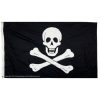
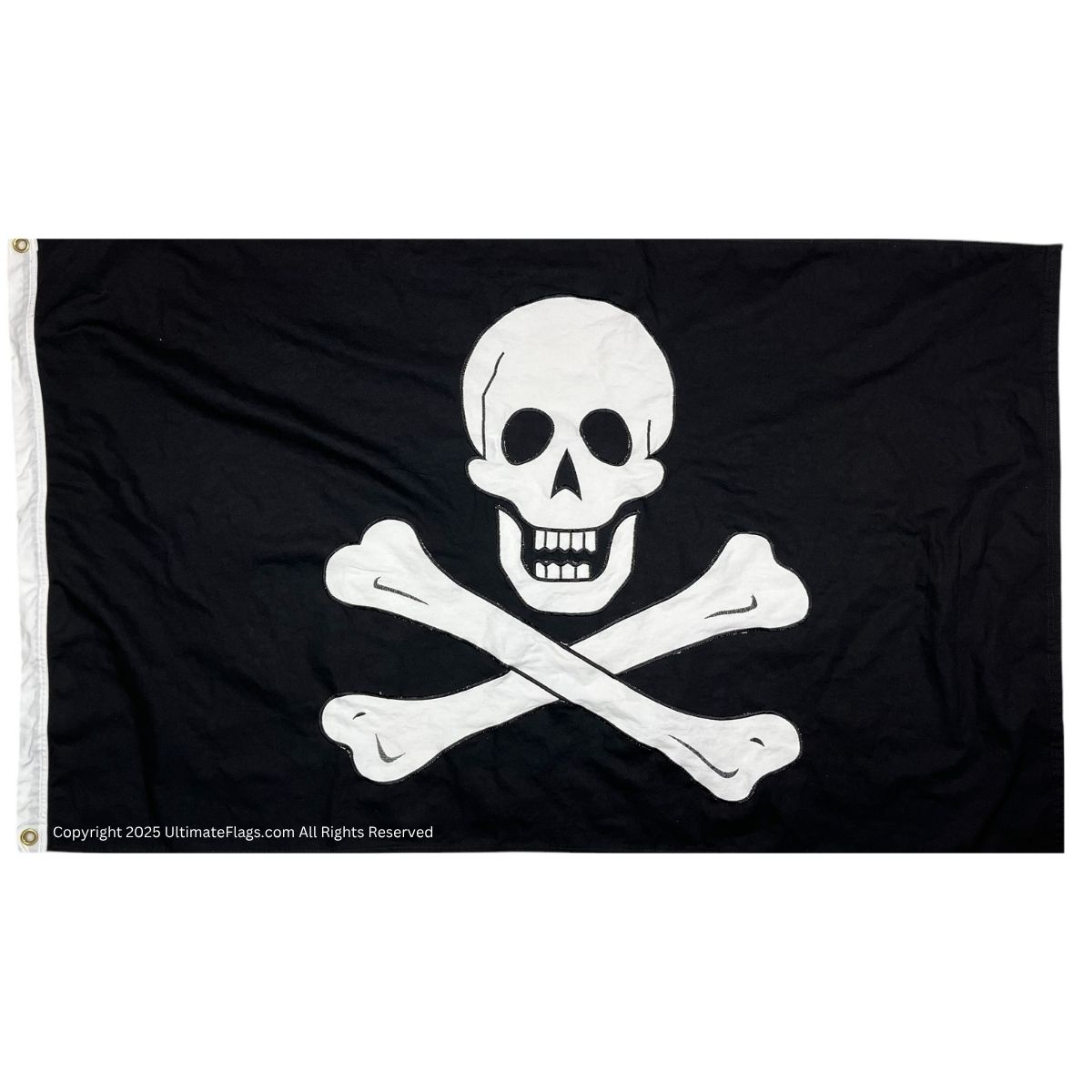
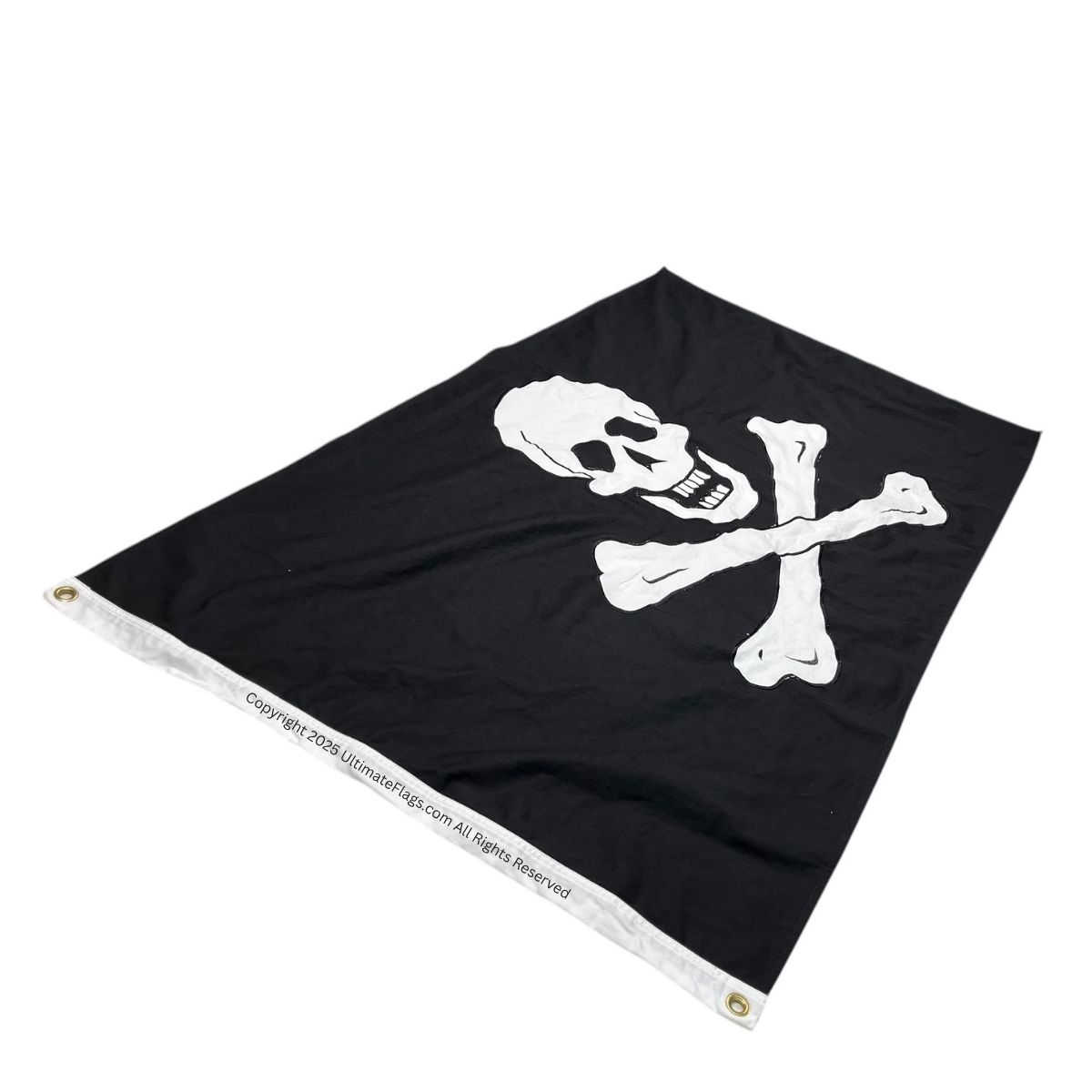
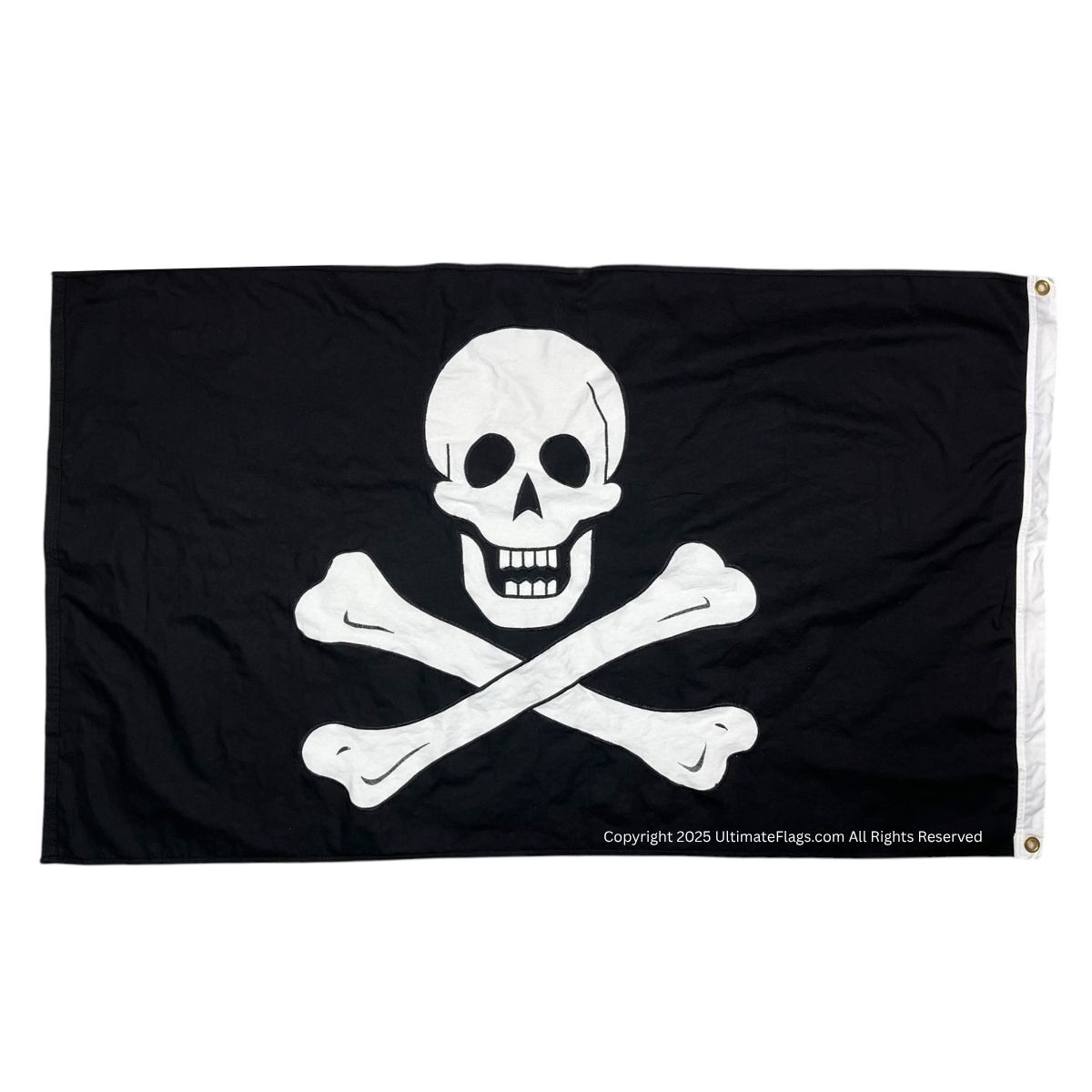
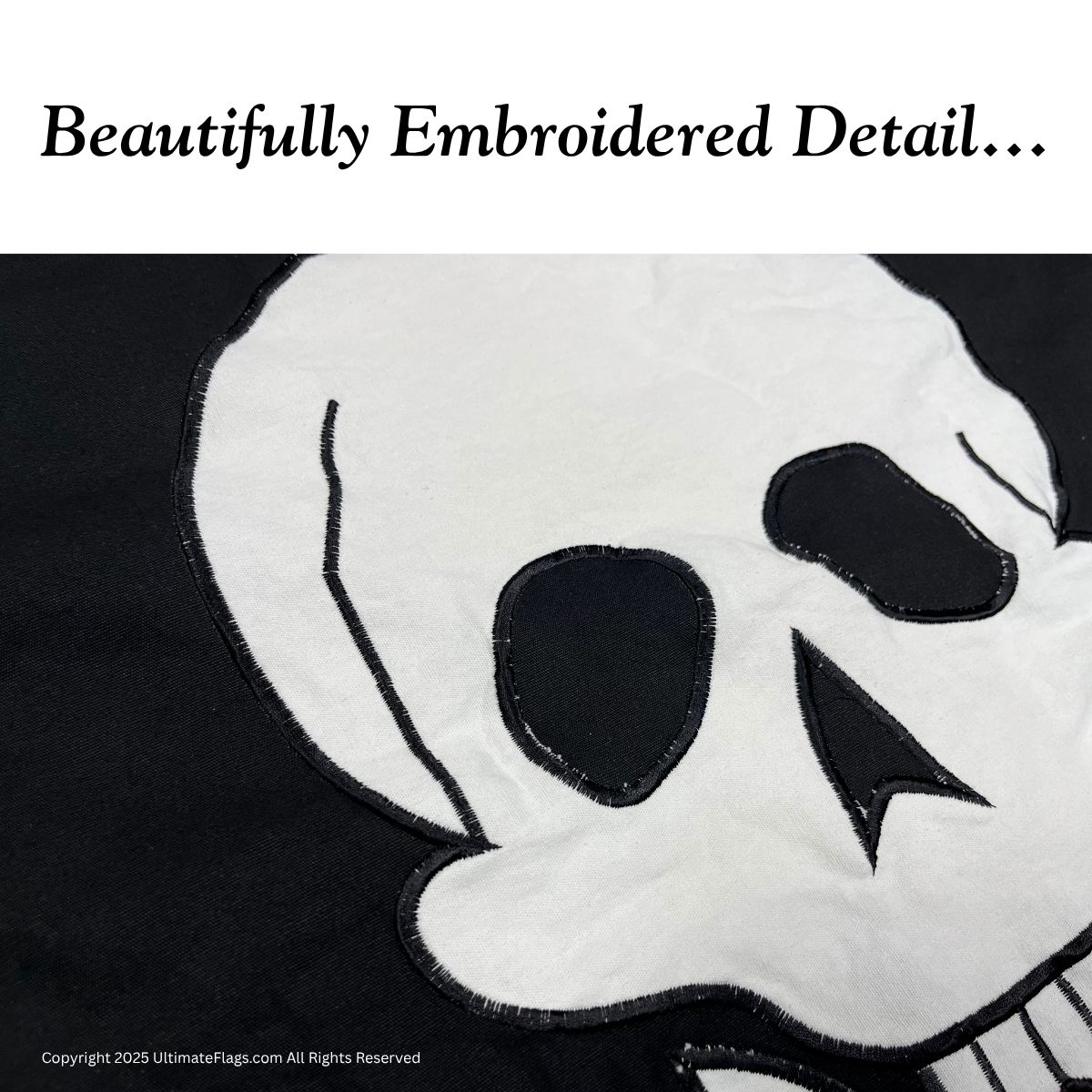
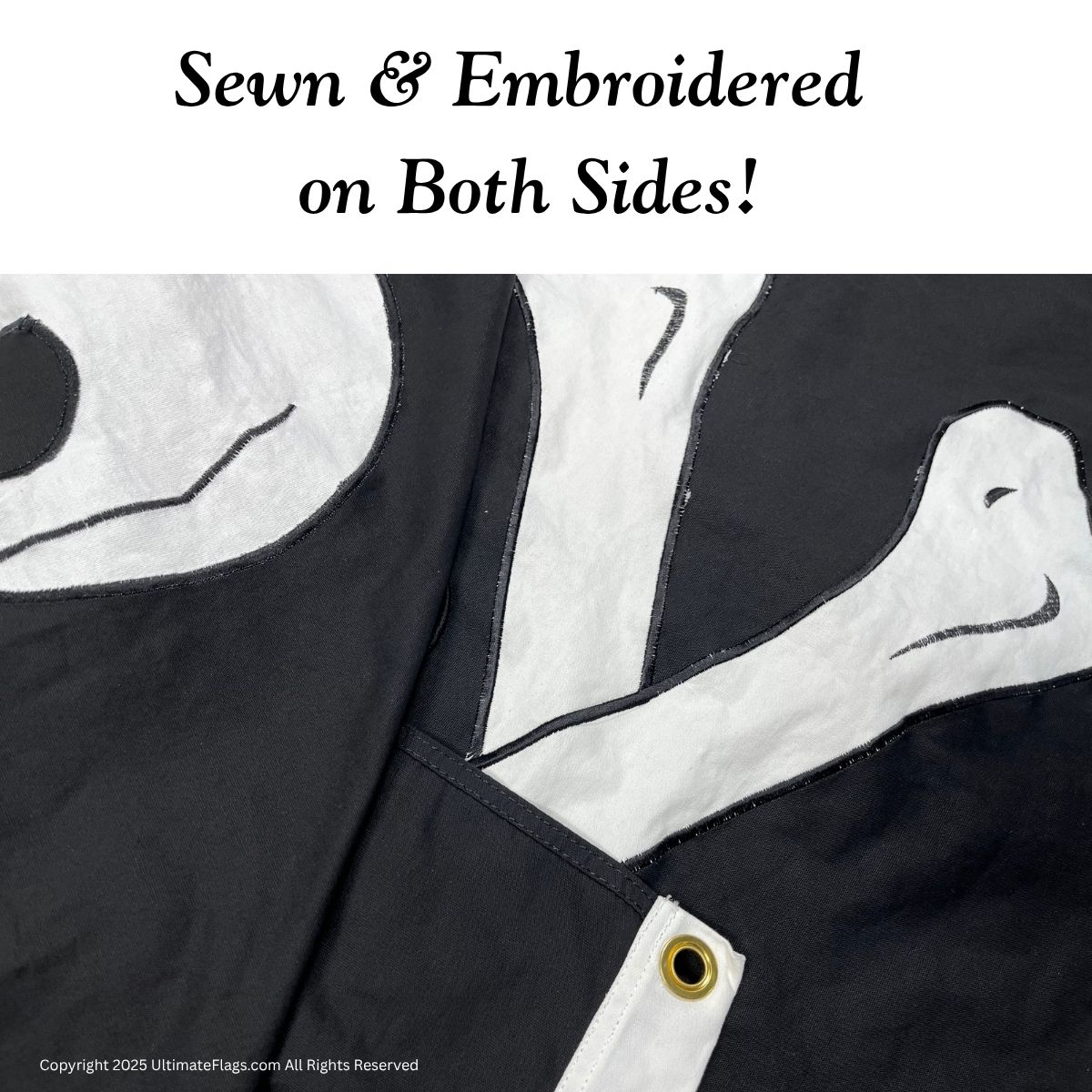
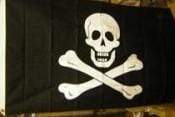
This is the real Jolly Roger — no eye patch, no Hollywood embellishment, no modern novelty additions. Just the pure, historically accurate skull and crossed bones that struck terror into the hearts of merchant sailors across the Caribbean, Atlantic, and Indian Ocean during the Golden Age of Piracy (1650s–1730s). Sewn and embroidered in heavy-duty 100% cotton, this flag is as close to the original as any reproduction flag can get — a genuine piece of maritime history you can hold in your hands.
The Jolly Roger is one of the most immediately recognizable symbols in the world, and its real history is far more fascinating — and far more calculated — than the romanticized version most people know.
During the Golden Age of Piracy, the skull and crossbones was not merely a decoration or a statement of identity. It was a precision psychological weapon — a carefully designed instrument of intimidation deployed at a very specific moment in the hunt for prey. A pirate captain spotting a target on the horizon would typically approach under a false flag — flying the colors of a friendly nation to get close without raising alarm. Only at the last moment, when escape was no longer possible, would the false colors be struck and the Jolly Roger run up the mast.
The message was instantaneous and universally understood across every language and nationality: surrender immediately and your lives will be spared. Most merchant captains, staring down the barrel of a well-armed pirate vessel with a skull-and-crossbones flying overhead, made the sensible decision. This is precisely what pirates wanted — a swift, bloodless transaction with minimal risk to their own crew.
The origin of the name “Jolly Roger” remains one of maritime history’s most debated questions. Leading theories include a derivation from the French “joli rouge” (pretty red) — referencing the blood-red flags flown by early pirates before the skull-and-crossbones became standard — or from “Old Roger,” period English slang for the devil. A third theory suggests it derived from a Tamil pirate commander known as “Ali Raja” (King of the Sea), whose name was anglicized by British sailors into “Jolly Roger.”
Every great pirate captain of the Golden Age flew a personalized Jolly Roger — making flag design a genuine form of personal branding that was reported in newspapers, trial records, and naval dispatches across Europe and the Americas. This no-patch skull-and-crossbones design is among the most historically accurate renditions, closely matching the earliest documented versions:
Blackbeard (Edward Teach, c.1680–1718) — the most feared pirate of the Golden Age — operated primarily along the American Atlantic coast and Caribbean, blockading the port of Charleston, South Carolina in 1718 with a fleet of four ships and holding the city hostage for medical supplies. His personal flag depicted a horned skeleton holding an hourglass and spear, but the plain skull-and-crossbones flew alongside it on his vessels. He was killed in battle off Ocracoke Island, North Carolina on November 22, 1718 by Lieutenant Robert Maynard of the Royal Navy — reportedly sustaining five gunshot wounds and over twenty sword cuts before finally falling.
Calico Jack (John Rackham, ?–1720) — named for his fondness for calico clothing — flew a skull above two crossed cutlasses and is perhaps better known today as the captain who sailed with Anne Bonny and Mary Read, two of the most famous female pirates in history. His career ended when a Royal Navy sloop caught his crew drunk in Jamaican waters in 1720. He was hanged in Port Royal, Jamaica, and his body was displayed in an iron cage as a warning to other pirates.
Bartholomew “Black Bart” Roberts (1682–1722) — the single most successful pirate in the Golden Age, capturing an estimated 400+ ships across the Caribbean, Atlantic, and West African coast — flew multiple personal flags, including one depicting himself standing triumphantly on two skulls labeled “A Barbadian’s Head” and “A Martinican’s Head,” representing governors who had pursued him. He was killed in battle off Cape Lopez, Gabon in 1722 and buried at sea in full pirate regalia per his own instructions.
Q: What does the Jolly Roger symbolize? The Jolly Roger represents piracy, rebellion, and maritime dominance — historically flown as a psychological weapon to intimidate enemy crews into immediate surrender, signaling that a pirate attack was imminent but that mercy was available to those who yielded without a fight.
Q: Is this an authentic historical version of the Jolly Roger? Yes — the no eye-patch skull-and-crossbones design closely matches the earliest documented versions flown by real pirates in the 17th and 18th centuries. The eye patch is a much later fictional addition popularized by novels and films. Historical accounts and court records describing actual pirate flags consistently describe plain skulls without embellishment.
Q: Why does this version have no eye patch? Because real pirates didn’t use one on their flags. The eye-patched skull is a 19th and 20th century fictional invention — popularized by illustrations for books like Treasure Island (1883) and later cemented by Hollywood films. The historically accurate Jolly Roger features a plain skull, making this cotton version one of the most authentic reproductions available.
Q: Can this flag be flown on a boat? Yes — for ceremonial or decorative purposes this flag is ideal for dockside display, boat shows, and nautical events. However cotton is not designed for extended exposure to salt air, rain, or harsh marine conditions. For permanent weather-resistant marine use, our all-weather nylon Jolly Roger is the recommended choice.
Q: Were there female pirates who flew the Jolly Roger? Yes — most famously Anne Bonny and Mary Read, who sailed under Calico Jack Rackham in the Caribbean around 1720. Both women disguised themselves as men and were reportedly among the fiercest fighters on the ship. When Rackham’s crew was captured drunk by the Royal Navy, accounts suggest Bonny and Read were among the only crew members sober enough to put up a fight.
Q: What happened to pirates after the Golden Age ended? The Golden Age of Piracy effectively ended in the early 1720s as the British Royal Navy mounted an aggressive anti-piracy campaign. The hanging of Bartholomew Roberts’ crew in 1722 — the largest piracy trial in history, with 52 men executed at Cape Coast Castle, Ghana — is widely regarded as the event that broke the back of organized Atlantic piracy. The gibbet cages displaying executed pirates’ bodies in harbor entrances became an effective deterrent across the Caribbean and Atlantic coast.
“At Ultimate Flags Inc., we are more than just a flag store; we are custodians of history, supporters of freedom, and believers in the power of symbols. Located in O’Brien, Florida, our family-owned business has been serving patriots, history enthusiasts, and flag collectors since 1997. We pride ourselves on offering an unparalleled selection of over 10,000 flags, including American flags, Confederate flags, military flags, historic flags, and custom designs. Each flag tells a story, and we are committed to preserving these narratives through our high-quality products.
Our passion for flags is matched only by our dedication to our customers. Whether you’re seeking a flag for personal expression, historical reenactments, or to honor your heritage, our experienced team is here to help you find the perfect flag. We understand the importance of quality, which is why we offer flags in various materials and sizes, suitable for all needs and occasions.
At Ultimate Flags, we believe in giving back. We actively support veterans, first responders, and non-profit organizations, ensuring that the brave men and women who serve our country are honored and remembered. Our online presence is not just about sales; it’s about educating our audience on the rich tapestry of American history and the significance of flags in our society.
Explore our vast collection in our online flag store and join us in celebrating the virtues, history, and ideas that shape our nation. For Patriots, Pride, & Freedom – Ultimate Flags Inc.”
SKU: [woo_sku]
In the summer of 1812, a group of old soldiers in New York did something that had no military requirement behind it — they picked up their muskets again.
These were veterans of the American Revolution. They had fought the British once, decades earlier, when the country was an idea rather than a nation. Now the British were back, pressing American sailors into their navy, arming Native American tribes against American settlers, and preparing to invade from the north. The veterans of the Revolution were legally exempt from compulsory military service — their age had earned them that relief. They formed up anyway.
The company became known as the Veteran Exempts. Their flag, featuring six-point stars, flew with them to one of the most consequential battles of the war.
The six-point star on this flag reflects an early American vexillological tradition that predates the standardization of the five-pointed star in American flag design. The Continental Congress’s Flag Resolution of 1777 established thirteen stars and thirteen stripes as the national design but did not specify the number of points on each star. Early American flags used both five- and six-point stars interchangeably.
Francis Hopkinson, the New Jersey delegate and designer who also claimed credit for the first Stars and Stripes, favored six-pointed stars in his designs. The famous account of Betsy Ross suggesting five-pointed stars — on the grounds that they could be cut in a single snip — reflects the practical transition toward the five-point standard. But in 1812, that standardization was not yet complete, and militia companies across the new nation flew flags that still carried the older six-point tradition.
The Veteran Exempts flag is a genuine artifact of that transitional moment in American flag history.
On September 11, 1814, the Veteran Exempts were present at what became known as the Battle of Plattsburgh — also called the Battle of Lake Champlain — in the northern reaches of New York State.
The British strategic plan was ambitious: a coordinated land and naval assault down the Lake Champlain corridor that, if successful, would drive deep into American territory and dramatically strengthen Britain’s negotiating position in the peace talks then underway in Ghent, Belgium. Governor-General Sir George Prevost commanded a British land force that significantly outnumbered the American defenders under Brigadier General Alexander Macomb.
The naval engagement decided everything. Commodore Thomas Macdonough had positioned his American fleet in Plattsburgh Bay with extraordinary care — rigging his ships with spring lines on their anchor cables so he could rotate them mid-battle to bring fresh broadsides to bear after one side’s guns were exhausted. When the British naval commander Captain George Downie was killed early in the engagement and his fleet systematically dismantled by Macdonough’s tactical preparation, Prevost had no choice. Without naval control of the lake, his supply lines were severed and his position untenable. He ordered a full retreat back into Canada.
The last British attempt to invade the northern United States was over.
The timing of Plattsburgh could not have been more significant. The peace negotiations at Ghent had stalled, with Britain demanding territorial concessions from the United States. News of the decisive American victory — a smaller force defeating a larger British invasion — arrived at the negotiating table and fundamentally shifted the dynamics. British negotiators, who had hoped for military leverage, found themselves without it.
The Treaty of Ghent was signed on December 24, 1814, restoring pre-war boundaries and ending the conflict. The Veteran Exempts had helped ensure that the country their generation had founded remained intact.
Quality Tier: Standard Quality
Who were the Veteran Exempts? A New York Militia company formed in July 1812, composed entirely of veterans of the American Revolution who were legally exempt from compulsory military service due to their age. They volunteered regardless and saw service during the War of 1812, including at the Battle of Plattsburgh in September 1814.
Why does this flag have six-point stars instead of five? The six-point star reflects an early American design tradition that was still in use during the War of 1812 era. The Continental Congress’s 1777 Flag Resolution established stars and stripes but did not mandate five-point stars specifically — both five- and six-point designs were used in early American flags before the five-point standard became firmly established.
What was the Battle of Plattsburgh? Fought on September 11, 1814, on Lake Champlain in northern New York, it was the decisive engagement that ended the last major British invasion attempt from the north. American Commodore Thomas Macdonough’s naval victory destroyed the British fleet and forced the British land forces to retreat into Canada. The battle significantly influenced the Treaty of Ghent negotiations that ended the War of 1812.
How did Plattsburgh affect the peace negotiations? British negotiators at Ghent had been demanding territorial concessions, expecting military leverage from planned invasions. The decisive American victory at Plattsburgh — combined with the failed attack on Baltimore — eliminated that leverage. The Treaty of Ghent, signed December 24, 1814, restored pre-war boundaries rather than granting Britain the territorial gains it had sought.
Is this flag a historical reproduction? Yes — this flag reproduces the design attributed to the Veteran Exempts company of New York Militia, featuring the six-point star design authentic to the early American flag tradition of the War of 1812 era.
“At Ultimate Flags Inc., we are more than just a flag store; we are custodians of history, supporters of freedom, and believers in the power of symbols. Located in O’Brien, Florida, our family-owned business has been serving patriots, history enthusiasts, and flag collectors since 1997. We pride ourselves on offering an unparalleled selection of over 10,000 flags, including American flags, Confederate flags, military flags, historic flags, and custom designs. Each flag tells a story, and we are committed to preserving these narratives through our high-quality products.
Our passion for flags is matched only by our dedication to our customers. Whether you’re seeking a flag for personal expression, historical reenactments, or to honor your heritage, our experienced team is here to help you find the perfect flag. We understand the importance of quality, which is why we offer flags in various materials and sizes, suitable for all needs and occasions.
At Ultimate Flags, we believe in giving back. We actively support veterans, first responders, and non-profit organizations, ensuring that the brave men and women who serve our country are honored and remembered. Our online presence is not just about sales; it’s about educating our audience on the rich tapestry of American history and the significance of flags in our society.
Explore our vast collection in our online flag store and join us in celebrating the virtues, history, and ideas that shape our nation. For Patriots, Pride, & Freedom – Ultimate Flags Inc.”
SKU: [woo_sku]

 Customer
On the internet you can find plenty of pirate flags. But they are all made of polyester. If you want a true flag, looking like a real pirate flag, then you need a cotton flag and you find it on ultimateflags.com