

Sale!


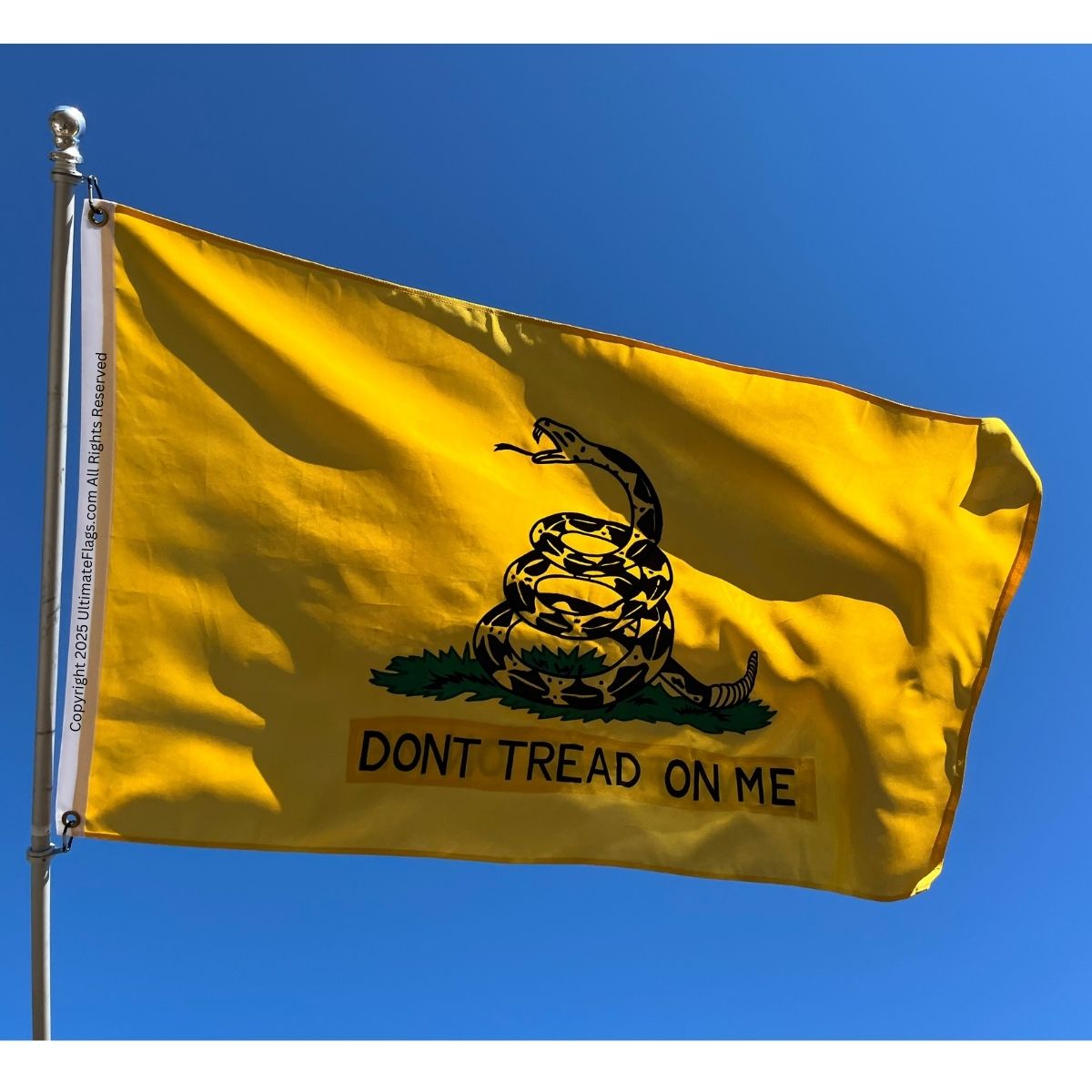
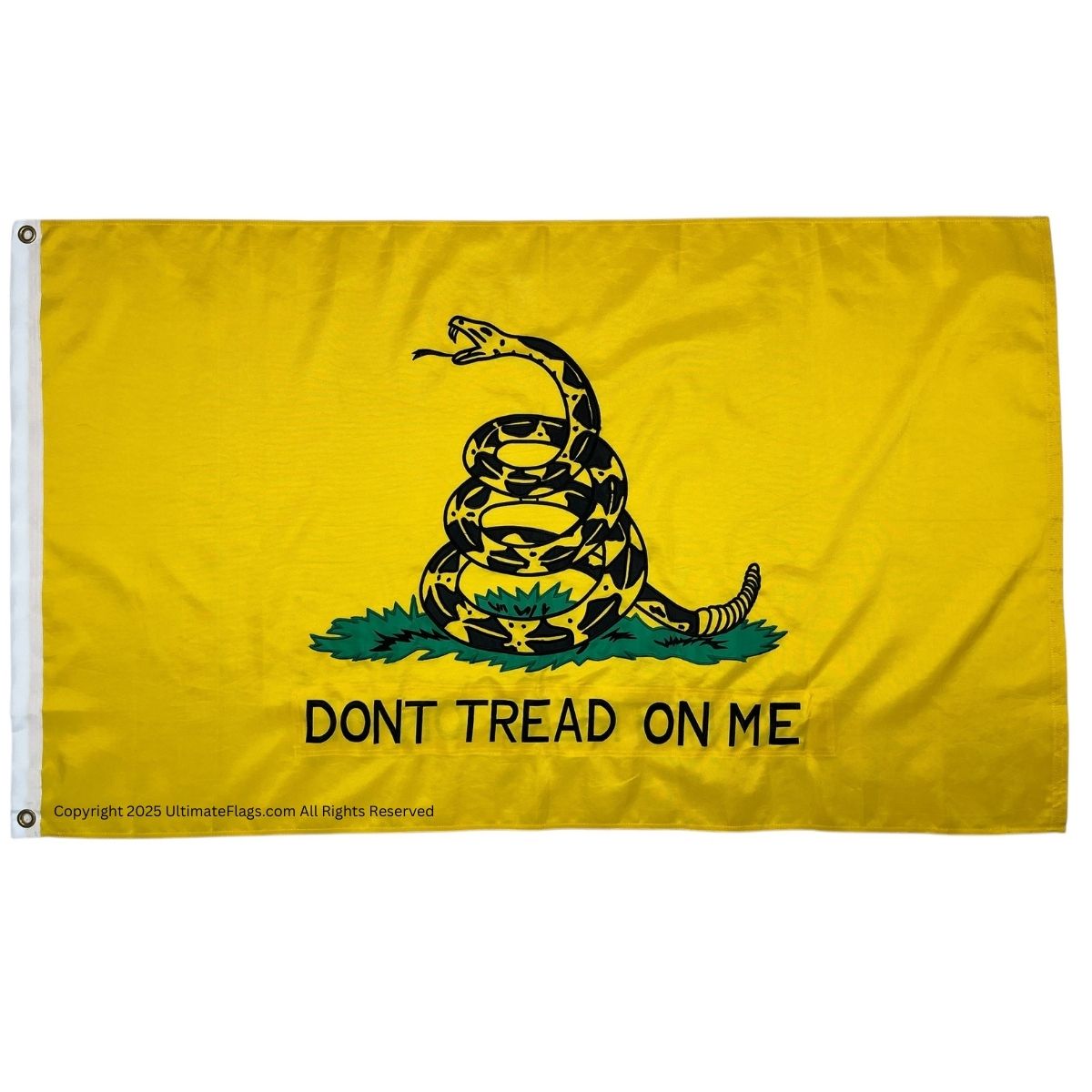
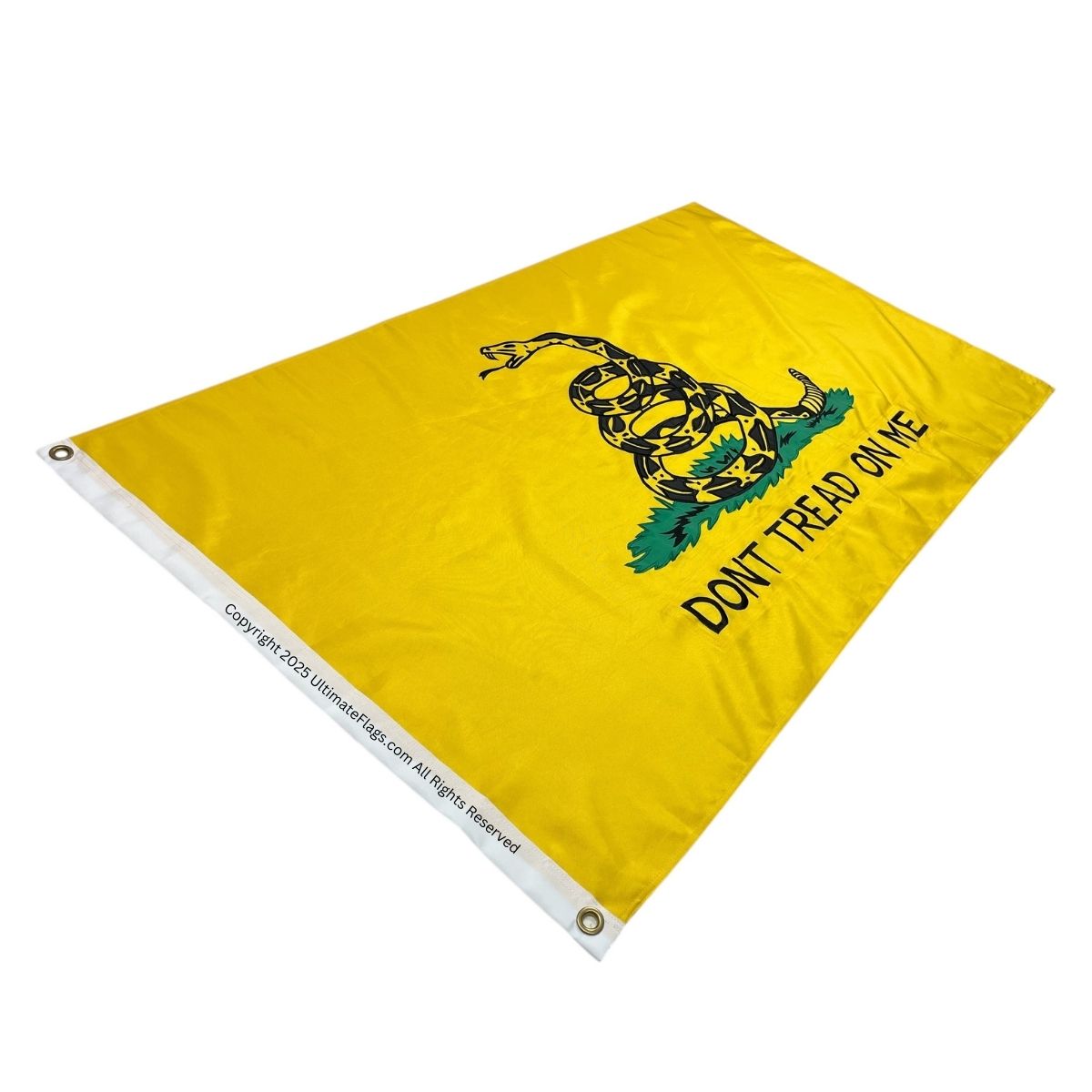
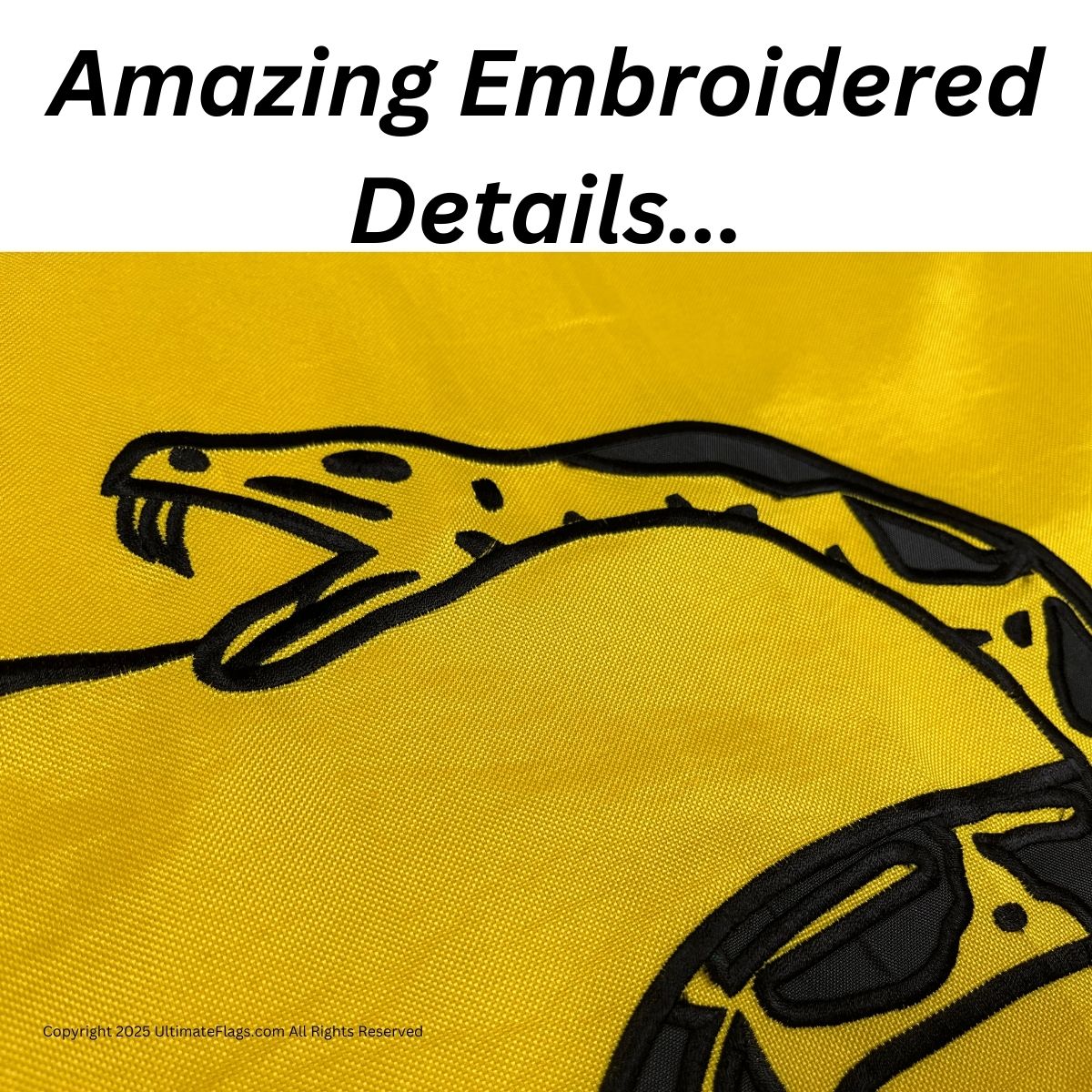
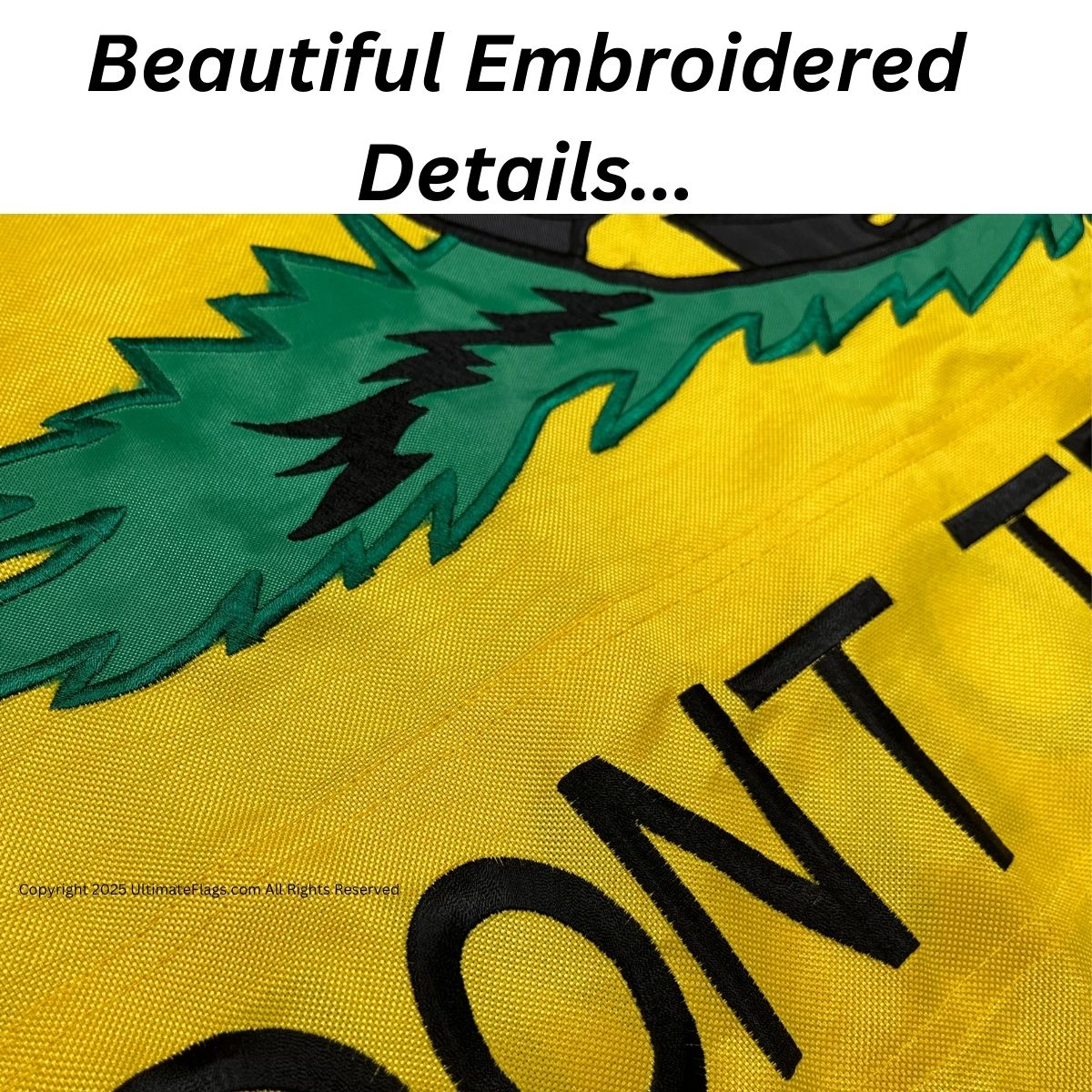

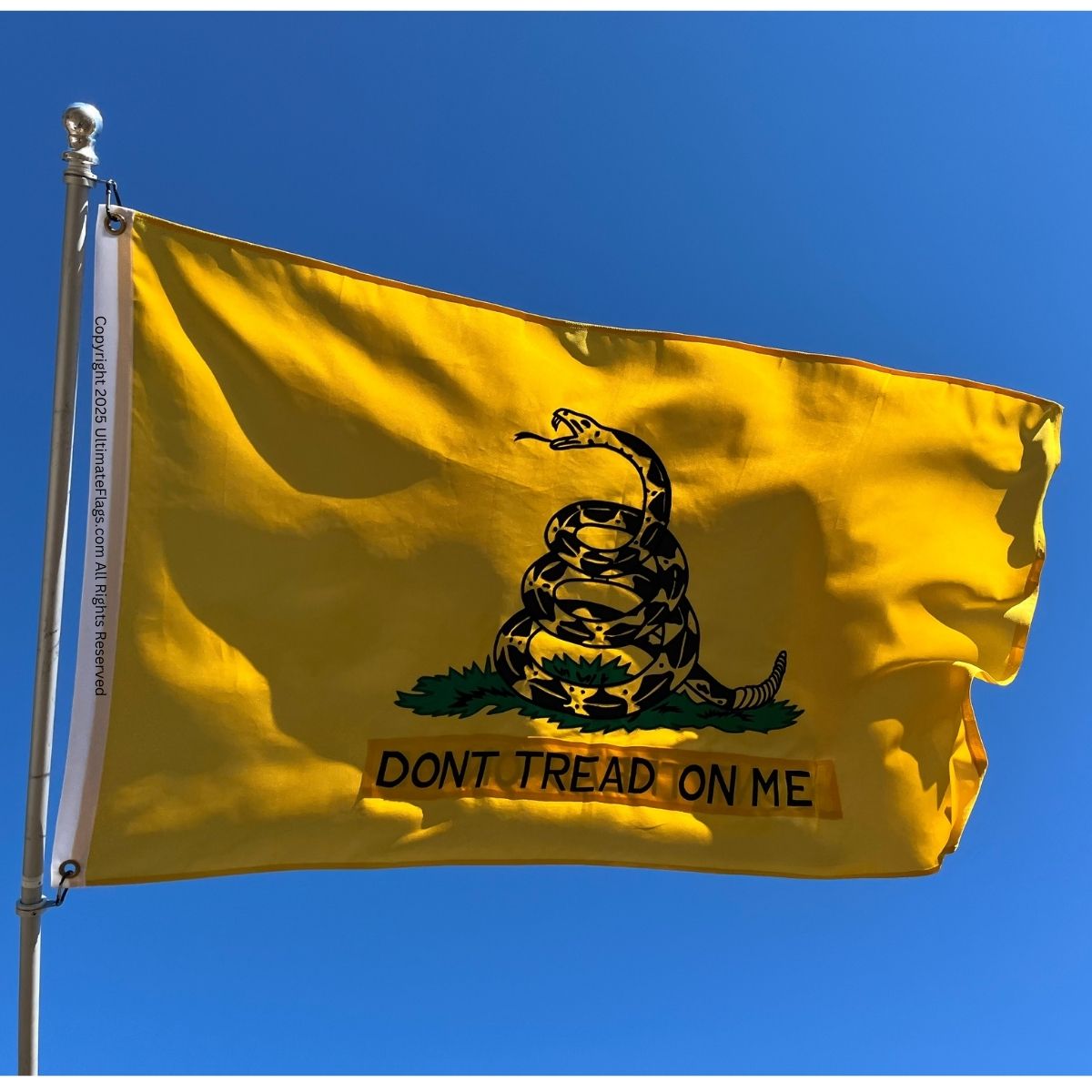
Gadsden Flag, Hopkins Flag – Sewn Double Nylon Embroidered Flag 12×18 inch, 2×3 3×5 4×6 5×8 feet
$39.95 – $89.95Price range: $39.95 through $89.95




Gadsden Flag – Hopkins Flag – Dont Tread on Me Flags
Choose Your Size: Available in 12×18 inch, 2×3 ft, 3×5 feet, 4 x 6 feet, or 5×8 feet
Most people know the Gadsden Flag. Very few know what the man who designed it actually went through in service of the cause it represents.
Colonel Christopher Gadsden of South Carolina didn’t just design a flag and hand it over. He endured imprisonment in solitary confinement in the dungeon of the old Spanish fort of San Marcos in St. Augustine, Florida — locked away by British General Cornwallis for nearly a year — and upon his release, returned directly to the fight for American independence. The flag he designed was already flying from Continental Navy ships before his imprisonment began. It kept flying while he was locked in that dungeon. It was still flying when he got out.
That kind of flag carries a different weight.
The Primary Source — February 9, 1776
Most historical flags exist in legend more than documentation. The Gadsden Flag is different. Its presentation is recorded in the Journal of the South Carolina Provincial Congress, dated February 9, 1776:
“Col. Gadsden presented to the Congress an elegant standard, such as is to be used by the commander in chief of the American navy; being a yellow field, with a lively representation of a rattle-snake in the middle, in the attitude of going to strike, and these words underneath, ‘DON’T TREAD ON ME!'”
That journal entry is the documentary foundation of the flag’s name and origin. It is one of the clearest primary source records of any Revolutionary-era flag’s creation and purpose — an eyewitness account of the moment the flag entered American history.
Christopher Gadsden — More Than a Flag Designer
Gadsden’s role in the Revolution extended far beyond the flag that bears his name. In 1765, a decade before the first shots were fired at Lexington and Concord, he helped found and lead the Sons of Liberty in South Carolina — the underground patriot network that organized resistance to the Stamp Act and laid the groundwork for the revolutionary movement throughout the colonies.
He served as a delegate to the Continental Congress and as a member of the Marine Committee of the Second Continental Congress — the body tasked with outfitting the nascent Continental Navy and creating a flag for its commander-in-chief. That committee’s decision to place a rattlesnake on a yellow field with “Dont Tread on Me” was Gadsden’s direct work.
He eventually rose to the rank of Brigadier General in the Continental Army. He was no armchair patriot drafting symbols from the safety of a drawing room. He was a soldier, organizer, and prisoner of war who paid personally for every principle that flag represents.
John Paul Jones and the Alfred
When the Gadsden Flag was first raised aboard the USS Alfred on January 4, 1776, one of the officers standing on that deck was a young naval lieutenant named John Paul Jones — serving as First Lieutenant under Commodore Hopkins. Jones would later command the Alfred himself, and would go on to become the most celebrated naval officer in American history, immortalized by his declaration during a losing battle: “I have not yet begun to fight.”
The flag that flew above Jones that January morning in Philadelphia harbor was the same flag reproduced here. It was present at the beginning of both the Continental Navy and the career of America’s greatest naval hero.
“Dont” — Historically Accurate, No Apostrophe
The motto on this flag reads Dont Tread on Me — without an apostrophe. This follows the only period documentation available: contemporary renderings of the flag from the Revolutionary era clearly show the word without the punctuation that modern usage would add. This flag reproduces the historically accurate spelling rather than a modernized version.
Five Sizes — Choose Your Display
- 12×18 inches — Boats, personal watercraft, compact displays, and collector framing
- 2×3 feet — Smaller poles, bracket mounts, indoor honor displays
- 3×5 feet — The most popular size for residential poles and standard outdoor display
- 4×6 feet — Greater visual presence on taller poles and open outdoor spaces
- 5×8 feet — Maximum impact for large poles, civic buildings, and prominent displays
Flag Details & Construction
Quality Tier: Military Quality — Double Nylon Embroidered (2-Ply)
- Sizes available: 12×18 in / 2×3 ft / 3×5 ft / 4×6 ft / 5×8 ft
- Material: Double-ply nylon — twice the thickness and durability of single-layer construction
- Construction: Fully embroidered on both sides — per traditional historic flag construction, design and words appear reversed on the reverse face
- Thread: Bright embroidery thread adds texture, depth, and visual weight
- Edges: Double and quad stitched throughout
- Header: Reinforced metal grommet rings for maximum durability
- Weather rating: All-weather — built for permanent outdoor display, ships at sea, and heavy weather conditions
Recommended Uses
- Permanent all-weather outdoor pole display
- Ships, vessels, and marine environments
- Military encampments, battlefields, and armed conflict display
- Indoor honor guard and memorial display
- Veterans’ organizations and patriotic civic display
- Historical reenactments and educational exhibits
- Premium collector piece for American Revolutionary history
Frequently Asked Questions
Who was Christopher Gadsden beyond designing the flag? Gadsden was one of the most committed patriots of the Revolution — founder of South Carolina’s Sons of Liberty in 1765, Continental Congress delegate, Marine Committee member, and eventual Brigadier General in the Continental Army. He was imprisoned in solitary confinement by the British at Fort San Marcos in St. Augustine for nearly a year and returned to active service upon his release.
What is the primary historical source for the Gadsden Flag? The Journal of the South Carolina Provincial Congress, dated February 9, 1776, contains a direct eyewitness account of Gadsden presenting the flag to Congress — describing the yellow field, the rattlesnake in striking attitude, and the “DON’T TREAD ON ME” inscription. It is one of the clearest documentary records of any Revolutionary-era flag’s origin.
What connection does John Paul Jones have to this flag? Jones served as First Lieutenant aboard the USS Alfred under Commodore Esek Hopkins — the ship from which the Gadsden Flag was first officially flown on January 4, 1776. He later commanded the Alfred himself before going on to become America’s most celebrated naval hero.
Why does this flag show the design backwards on the reverse? This flag follows traditional historic flag construction — the design is embroidered to read correctly from the front, with the reverse appearing mirrored. This is the standard used for national flags, military colors, and historic flag reproductions worldwide. It differs from double-sided construction where two flag faces are sewn together to read correctly from both directions.
Is Military Quality appropriate for permanent outdoor display? Yes — double-ply nylon embroidered construction is the highest-rated flag material available, built specifically for all-weather permanent outdoor display including heavy weather, marine environments, and conditions where lesser flags would degrade.
Check out our Full Collection of Gadsden Flags
“At Ultimate Flags Inc., we are more than just a flag store; we are custodians of history, supporters of freedom, and believers in the power of symbols. Located in O’Brien, Florida, our family-owned business has been serving patriots, history enthusiasts, and flag collectors since 1997. We pride ourselves on offering an unparalleled selection of over 10,000 flags, including American flags, Confederate flags, military flags, historic flags, and custom designs. Each flag tells a story, and we are committed to preserving these narratives through our high-quality products.
Our passion for flags is matched only by our dedication to our customers. Whether you’re seeking a flag for personal expression, historical reenactments, or to honor your heritage, our experienced team is here to help you find the perfect flag. We understand the importance of quality, which is why we offer flags in various materials and sizes, suitable for all needs and occasions.
At Ultimate Flags, we believe in giving back. We actively support veterans, first responders, and non-profit organizations, ensuring that the brave men and women who serve our country are honored and remembered. Our online presence is not just about sales; it’s about educating our audience on the rich tapestry of American history and the significance of flags in our society.
Explore our vast collection in our online flag store and join us in celebrating the virtues, history, and ideas that shape our nation. For Patriots, Pride, & Freedom – Ultimate Flags Inc.”
SKU: P3-HU-RU-FL-NNEMB-Gadsden
Description
Description
German Naval Jack — Weimar Republic Era (1921–1933), Iron Cross with German Canton, 3×5 Feet
A Rare Flag from Germany’s Most Turbulent Political Era
The German Naval Jack of 1921–1933 is one of the most historically fascinating and collectible flags of the 20th century — a design that bridges the end of the German Empire and the rise of the Third Reich, born entirely within the brief and turbulent years of the Weimar Republic. Featuring the timeless Iron Cross, the traditional black, white, and red imperial colors, and the German national flag in the canton, this jack captures a Germany torn between its imperial past and an uncertain democratic future.
History & Symbolism of the 1921–1933 German Naval Jack
The Weimar Republic (1919–1933) was established in the aftermath of Germany’s defeat in World War I and the abdication of Kaiser Wilhelm II in November 1918. The new democratic government faced an almost impossible task — governing a nation shattered by military defeat, crippled by the punishing Treaty of Versailles (1919), and bitterly divided between monarchists, republicans, communists, and early Nazi agitators.
One of the Weimar Republic’s most politically charged decisions was the question of national colors and flag identity. The new Republic adopted black, red, and gold as its official national colors — the colors of the liberal revolutionary movement of 1848 — replacing the black, white, and red of the German Empire. This decision was fiercely contested by German nationalists and monarchists, who viewed the new colors as a humiliating repudiation of imperial German heritage.
The German Naval Jack adopted in 1921 reflected this political compromise — incorporating the black, white, and red of the old imperial tradition alongside the new republican identity. Its design combined:
- The black, white, and red field — the colors of the Prussian and imperial German heraldic tradition, drawn from the arms of the Hohenzollern dynasty and the Hanseatic League, representing continuity with Germany’s pre-Weimar military and naval heritage
- A bold black Iron Cross (Eisernes Kreuz) centered on the flag — Germany’s most venerated military symbol, established in 1813 during the Napoleonic Wars and carried through the Franco-Prussian War and World War I as the nation’s premier decoration for battlefield valor
- The German national flag in the canton (upper hoist corner) — incorporating the black, red, and gold tricolor of the Weimar Republic, formally acknowledging the new democratic state’s authority while surrounding it with imperial colors that many in the German Navy still preferred
This design tension — republican colors in the canton, imperial colors dominating the field — perfectly encapsulates the fundamental instability of the Weimar Republic itself, which was perpetually caught between democratic legitimacy and the gravitational pull of its imperial past.
The flag was in use from 1921 until 1933, when Adolf Hitler’s appointment as Chancellor and the subsequent Nazi seizure of power (Machtergreifung) brought an end to the Weimar Republic and its flag designs. The black, red, and gold republican tricolor was abolished and replaced with the black, white, and red of the imperial era — and ultimately the swastika flag — as the Nazis deliberately reclaimed imperial German symbolism and rejected the Weimar democratic heritage entirely.
Frequently Asked Questions & Little-Known Facts
Q: Why did the Weimar Republic keep imperial colors in its naval jack? The German Navy (Reichsmarine) of the Weimar era was deeply conservative and largely monarchist in its officer culture — a reflection of the Imperial German Navy’s traditions and the class backgrounds of its officers. The retention of black, white, and red in the naval jack was a political concession to naval tradition and to the powerful nationalist factions within German society who refused to accept the republican colors as legitimate.
Q: What was the Weimar Republic and why did it fail? The Weimar Republic (1919–1933) was Germany’s first democratic government — established under enormous pressure following WWI defeat, burdened from birth by the “stab-in-the-back” myth promoted by German nationalists who falsely blamed civilian politicians for Germany’s military defeat. It survived multiple crises — the hyperinflation of 1923, multiple coup attempts including Hitler’s Beer Hall Putsch (1923), and the devastating Great Depression (1929) — before finally collapsing when President Paul von Hindenburg appointed Hitler as Chancellor in January 1933.
Q: What happened to the Weimar Republic’s black, red, and gold flag? Upon the Nazi seizure of power in 1933, the black, red, and gold tricolor was immediately abolished and replaced with the imperial black, white, and red — and then progressively with the swastika flag. The black, red, and gold was restored as Germany’s national flag following World War II and remains the flag of the Federal Republic of Germany today.
Q: What is the Iron Cross’s significance in this flag? The Iron Cross on this jack connects the Weimar Republic’s naval identity directly to 800 years of German military heritage — from the Teutonic Knights of the 13th century through the Napoleonic Wars, the Franco-Prussian War, and World War I. Its presence on a republican-era flag was a deliberate statement that the new Germany, whatever its political form, maintained continuity with the military traditions and sacrifices of the old.
Q: Is this flag associated with the Nazi regime? No — this flag was retired in 1933 when the Nazis came to power and abolished Weimar-era symbols. It is an exclusively Weimar Republic era design with no direct Nazi association, making it one of the more historically straightforward German flags of the early 20th century for collectors and historians.
Standard Quality — Super-Weave Polyester, 3×5 Feet
Our most popular quality level — durable, lightweight, and built to fly in even the lightest breeze.
- Through-dyed on both sides — design fully visible from either direction
- Bright, fade-resistant dye for lasting color in indoor and fair-weather outdoor use
- 100% synthetic super-weave polyester — lightweight, waterproof, and highly responsive in minimal wind
- Double-stitched edges on all sides for lasting durability
- Reinforced grommet holes with metal rings for secure, rust-free pole attachment
- Fits any standard flagpole or mounting system
Recommended Uses
- Weimar Republic and WWI-era reenactments and living history events
- Theatrical productions — film, television, and stage
- Indoor museum and historical displays
- Academic and educational exhibitions
- Collectors of Imperial German, Weimar Republic, and early 20th century German naval history
- Fair-weather outdoor display, events, and parades
Premium Quality Cotton Polehem Sewn Nazi Banner 3 x 5
See Nazi Germany Flag Collection Here.
Check out our entire WW2 Nazi Flag Collection Here.
We are adding more and more daily!
“At Ultimate Flags Inc., we are more than just a flag store; we are custodians of history, supporters of freedom, and believers in the power of symbols. Located in O’Brien, Florida, our family-owned business has been serving patriots, history enthusiasts, and flag collectors since 1997. We pride ourselves on offering an unparalleled selection of over 10,000 flags, including American flags, Confederate flags, military flags, historic flags, and custom designs. Each flag tells a story, and we are committed to preserving these narratives through our high-quality products.
Our passion for flags is matched only by our dedication to our customers. Whether you’re seeking a flag for personal expression, historical reenactments, or to honor your heritage, our experienced team is here to help you find the perfect flag. We understand the importance of quality, which is why we offer flags in various materials and sizes, suitable for all needs and occasions.
At Ultimate Flags, we believe in giving back. We actively support veterans, first responders, and non-profit organizations, ensuring that the brave men and women who serve our country are honored and remembered. Our online presence is not just about sales; it’s about educating our audience on the rich tapestry of American history and the significance of flags in our society.
Explore our vast collection in our online flag store and join us in celebrating the virtues, history, and ideas that shape our nation. For Patriots, Pride, & Freedom – Ultimate Flags Inc.”
SKU: C21D1F7-RU-FL3X5P-354-830363
Recently Viewed Flags

tom c.
 Customer
5/5
very bold flag
3 months ago


Rogerio D.
Customer
5/5
6 months ago

Royce Sample
Customer
5/5
The Gadsden Flag’s Embroidery is top notch and the attention to detail is amazing.
We are proudly flying this flag and will continue to buy from Ultimate Flags.
Their customer service is top notch and they get the orders out as soon as possible.
Thank y’all for being the best at what you do.
12 months ago

Lewis M.
Customer
5/5
1 year ago

Anonymous
Customer
5/5
Bought the small Gadsden flag for my boat. The flag is high quality and stitched and has held up well so far. The purchase process was very simple and shipping was prompt and without issue.
1 year ago
 Unhappy With Your Product? We’ll Take It Back!