

“German Reichs Labor Service Flag 3 X 5 ft. Standard Horst Wessel” has been added to your cart. View cart
Sale!

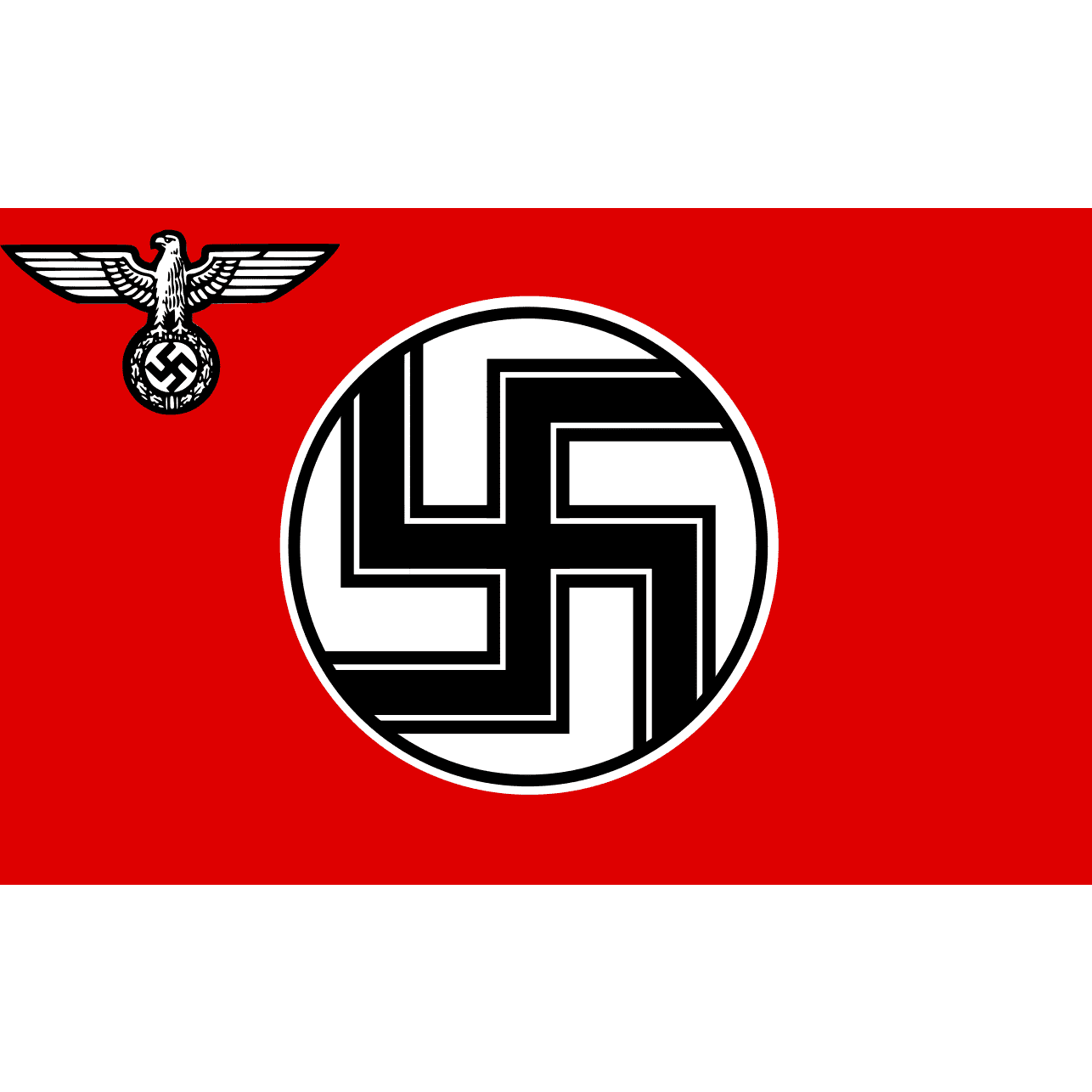
German Reichs Labor Service Flag 3 X 5 ft. Standard Horst Wessel
$39.95 Original price was: $39.95.$37.95Current price is: $37.95.
In stock




German Reich Service Flag — Reichsdienstflagge (1933–1945), 3×5 Feet, Standard Quality Polyester
The Official Flag of Nazi Germany’s Non-Military Government Institutions
The Reichsdienstflagge (German: Reich Service Flag) is one of the lesser-known but historically fascinating flags of the Third Reich — the official standard flown by non-military government facilities, state enterprises, and civil authorities throughout Nazi Germany from 1933 to 1945. Distinct from both the Nazi Party flag and the military war ensigns, this flag occupied a unique administrative role within the vast bureaucratic apparatus of the Third Reich.
A Note on Display & Legality
This flag is presented strictly in its historical context. We strongly recommend it be displayed only in historical, educational, theatrical, or museum settings. Displaying this flag outside of those contexts carries significant potential for offense given its association with the Nazi regime and the Holocaust.
Legal notice: While display of this flag is protected under the First Amendment in the United States, it is illegal to display or possess in Germany, Austria, France, Poland, and several other countries outside of authorized educational and artistic contexts. We ship worldwide — it is the buyer’s sole responsibility to understand and comply with the laws of their country.
History of the Reichsdienstflagge
When the Nazi Party came to power in 1933, one of its first priorities was the systematic reorganization and visual branding of every institution of German civic life. The Reichsdienstflagge was established as part of this effort — a standardized flag specifically designated for use by non-military state authorities and government-controlled enterprises.
Unlike the Reichskriegsflagge (military war ensign) or the Hakenkreuzflagge (national party flag), the Reich Service Flag was designed for the vast network of civilian state institutions that kept the machinery of the Third Reich running day to day. Documented uses included:
- Deutsche Reichsbahn — Germany’s national railway system, one of the largest employers in the country and a critical logistical backbone of the war effort
- Reichsbank — the German national bank, which played a central role in financing rearmament and, notoriously, in processing assets seized from Holocaust victims
- Reichspost — Germany’s national postal service
- Vessels on inland waterways — river and canal craft operating under state authority
- Official government automobiles — displayed on the vehicles of civil authorities throughout the Reich and occupied territories
The flag followed an official “single-reverse” construction — meaning the reverse side carries a mirror image of the obverse design, a specific vexillological standard for official government flags ensuring the design reads correctly from both sides.
Frequently Asked Questions & Little-Known Facts
Q: How is the Reich Service Flag different from the standard Nazi national flag? While both incorporate the swastika, the Reichsdienstflagge was specifically designated for civilian government and state enterprise use — separate from the party flag, military war flags, and naval ensigns. It represented the administrative and bureaucratic face of the Nazi state rather than its military or political arms.
Q: What was the Reichsbahn’s role in the Holocaust? The Deutsche Reichsbahn (German National Railway), which flew this flag at its facilities, was the primary logistical instrument used to transport victims to Nazi concentration and extermination camps throughout occupied Europe — making it one of the most documented institutional participants in the Holocaust. This history makes the Reichsdienstflagge a deeply significant artifact for Holocaust historians and researchers.
Q: What is a “single-reverse” flag? A single-reverse flag is one where the reverse side displays a mirror image of the front design — so the swastika, which faces one direction on the obverse, faces the opposite direction on the reverse. This was the official construction standard for German government service flags, ensuring visual consistency regardless of wind direction.
Q: What is the ancient history of the swastika? The swastika predates the Nazi Party by thousands of years. In Hinduism, Buddhism, and Jainism it has been a sacred symbol of good fortune and prosperity for over 5,000 years and remains in widespread use across South and East Asia. In the United States it appeared on Coca-Cola promotional items, Boy Scout insignia, and military unit patches before World War II permanently altered its meaning in Western culture.
Q: Is this flag still used today? This specific flag design is no longer used in any official capacity. However, some fringe groups continue to use Third Reich–era flags in unofficial and underground contexts. This listing is intended exclusively for historical, educational, and theatrical use.
Standard Quality — Super-Weave Polyester, 3×5 Feet
Our most popular quality level — lightweight, durable, and built to fly in even the slightest breeze.
- Through-dyed on both sides — design fully visible from either direction, per the flag’s official single-reverse construction standard
- Bright, fade-resistant dye for lasting color in indoor and fair-weather outdoor use
- 100% synthetic super-weave polyester — lightweight enough to fly in minimal wind conditions
- Double-stitched edges on all sides for lasting durability
- Reinforced grommet holes with metal rings for secure pole attachment
- Fits any standard flagpole or mounting system
Recommended Uses
- WWII reenactments and living history events
- Theatrical productions — film, television, and stage
- Indoor museum and historical displays
- Academic and educational exhibitions
- Collectors of Third Reich administrative and civil history artifacts
- Fair-weather outdoor display
Premium Quality Cotton Polehem Sewn Nazi Banner 3 x 5
See Nazi Germany Flag Collection Here.
Check out our entire WW2 Nazi Flag Collection Here.
We are adding more and more daily!
“At Ultimate Flags Inc., we are more than just a flag store; we are custodians of history, supporters of freedom, and believers in the power of symbols. Located in O’Brien, Florida, our family-owned business has been serving patriots, history enthusiasts, and flag collectors since 1997. We pride ourselves on offering an unparalleled selection of over 10,000 flags, including American flags, Confederate flags, military flags, historic flags, and custom designs. Each flag tells a story, and we are committed to preserving these narratives through our high-quality products.
Our passion for flags is matched only by our dedication to our customers. Whether you’re seeking a flag for personal expression, historical reenactments, or to honor your heritage, our experienced team is here to help you find the perfect flag. We understand the importance of quality, which is why we offer flags in various materials and sizes, suitable for all needs and occasions.
At Ultimate Flags, we believe in giving back. We actively support veterans, first responders, and non-profit organizations, ensuring that the brave men and women who serve our country are honored and remembered. Our online presence is not just about sales; it’s about educating our audience on the rich tapestry of American history and the significance of flags in our society.
Explore our vast collection in our online flag store and join us in celebrating the virtues, history, and ideas that shape our nation. For Patriots, Pride, & Freedom – Ultimate Flags Inc.”
SKU: C40D2F23-RU-FL3X5P-837034
Description
Description
German Naval Jack — Weimar Republic Era (1921–1933), Iron Cross with German Canton, 3×5 Feet
A Rare Flag from Germany’s Most Turbulent Political Era
The German Naval Jack of 1921–1933 is one of the most historically fascinating and collectible flags of the 20th century — a design that bridges the end of the German Empire and the rise of the Third Reich, born entirely within the brief and turbulent years of the Weimar Republic. Featuring the timeless Iron Cross, the traditional black, white, and red imperial colors, and the German national flag in the canton, this jack captures a Germany torn between its imperial past and an uncertain democratic future.
History & Symbolism of the 1921–1933 German Naval Jack
The Weimar Republic (1919–1933) was established in the aftermath of Germany’s defeat in World War I and the abdication of Kaiser Wilhelm II in November 1918. The new democratic government faced an almost impossible task — governing a nation shattered by military defeat, crippled by the punishing Treaty of Versailles (1919), and bitterly divided between monarchists, republicans, communists, and early Nazi agitators.
One of the Weimar Republic’s most politically charged decisions was the question of national colors and flag identity. The new Republic adopted black, red, and gold as its official national colors — the colors of the liberal revolutionary movement of 1848 — replacing the black, white, and red of the German Empire. This decision was fiercely contested by German nationalists and monarchists, who viewed the new colors as a humiliating repudiation of imperial German heritage.
The German Naval Jack adopted in 1921 reflected this political compromise — incorporating the black, white, and red of the old imperial tradition alongside the new republican identity. Its design combined:
- The black, white, and red field — the colors of the Prussian and imperial German heraldic tradition, drawn from the arms of the Hohenzollern dynasty and the Hanseatic League, representing continuity with Germany’s pre-Weimar military and naval heritage
- A bold black Iron Cross (Eisernes Kreuz) centered on the flag — Germany’s most venerated military symbol, established in 1813 during the Napoleonic Wars and carried through the Franco-Prussian War and World War I as the nation’s premier decoration for battlefield valor
- The German national flag in the canton (upper hoist corner) — incorporating the black, red, and gold tricolor of the Weimar Republic, formally acknowledging the new democratic state’s authority while surrounding it with imperial colors that many in the German Navy still preferred
This design tension — republican colors in the canton, imperial colors dominating the field — perfectly encapsulates the fundamental instability of the Weimar Republic itself, which was perpetually caught between democratic legitimacy and the gravitational pull of its imperial past.
The flag was in use from 1921 until 1933, when Adolf Hitler’s appointment as Chancellor and the subsequent Nazi seizure of power (Machtergreifung) brought an end to the Weimar Republic and its flag designs. The black, red, and gold republican tricolor was abolished and replaced with the black, white, and red of the imperial era — and ultimately the swastika flag — as the Nazis deliberately reclaimed imperial German symbolism and rejected the Weimar democratic heritage entirely.
Frequently Asked Questions & Little-Known Facts
Q: Why did the Weimar Republic keep imperial colors in its naval jack? The German Navy (Reichsmarine) of the Weimar era was deeply conservative and largely monarchist in its officer culture — a reflection of the Imperial German Navy’s traditions and the class backgrounds of its officers. The retention of black, white, and red in the naval jack was a political concession to naval tradition and to the powerful nationalist factions within German society who refused to accept the republican colors as legitimate.
Q: What was the Weimar Republic and why did it fail? The Weimar Republic (1919–1933) was Germany’s first democratic government — established under enormous pressure following WWI defeat, burdened from birth by the “stab-in-the-back” myth promoted by German nationalists who falsely blamed civilian politicians for Germany’s military defeat. It survived multiple crises — the hyperinflation of 1923, multiple coup attempts including Hitler’s Beer Hall Putsch (1923), and the devastating Great Depression (1929) — before finally collapsing when President Paul von Hindenburg appointed Hitler as Chancellor in January 1933.
Q: What happened to the Weimar Republic’s black, red, and gold flag? Upon the Nazi seizure of power in 1933, the black, red, and gold tricolor was immediately abolished and replaced with the imperial black, white, and red — and then progressively with the swastika flag. The black, red, and gold was restored as Germany’s national flag following World War II and remains the flag of the Federal Republic of Germany today.
Q: What is the Iron Cross’s significance in this flag? The Iron Cross on this jack connects the Weimar Republic’s naval identity directly to 800 years of German military heritage — from the Teutonic Knights of the 13th century through the Napoleonic Wars, the Franco-Prussian War, and World War I. Its presence on a republican-era flag was a deliberate statement that the new Germany, whatever its political form, maintained continuity with the military traditions and sacrifices of the old.
Q: Is this flag associated with the Nazi regime? No — this flag was retired in 1933 when the Nazis came to power and abolished Weimar-era symbols. It is an exclusively Weimar Republic era design with no direct Nazi association, making it one of the more historically straightforward German flags of the early 20th century for collectors and historians.
Standard Quality — Super-Weave Polyester, 3×5 Feet
Our most popular quality level — durable, lightweight, and built to fly in even the lightest breeze.
- Through-dyed on both sides — design fully visible from either direction
- Bright, fade-resistant dye for lasting color in indoor and fair-weather outdoor use
- 100% synthetic super-weave polyester — lightweight, waterproof, and highly responsive in minimal wind
- Double-stitched edges on all sides for lasting durability
- Reinforced grommet holes with metal rings for secure, rust-free pole attachment
- Fits any standard flagpole or mounting system
Recommended Uses
- Weimar Republic and WWI-era reenactments and living history events
- Theatrical productions — film, television, and stage
- Indoor museum and historical displays
- Academic and educational exhibitions
- Collectors of Imperial German, Weimar Republic, and early 20th century German naval history
- Fair-weather outdoor display, events, and parades
Premium Quality Cotton Polehem Sewn Nazi Banner 3 x 5
See Nazi Germany Flag Collection Here.
Check out our entire WW2 Nazi Flag Collection Here.
We are adding more and more daily!
“At Ultimate Flags Inc., we are more than just a flag store; we are custodians of history, supporters of freedom, and believers in the power of symbols. Located in O’Brien, Florida, our family-owned business has been serving patriots, history enthusiasts, and flag collectors since 1997. We pride ourselves on offering an unparalleled selection of over 10,000 flags, including American flags, Confederate flags, military flags, historic flags, and custom designs. Each flag tells a story, and we are committed to preserving these narratives through our high-quality products.
Our passion for flags is matched only by our dedication to our customers. Whether you’re seeking a flag for personal expression, historical reenactments, or to honor your heritage, our experienced team is here to help you find the perfect flag. We understand the importance of quality, which is why we offer flags in various materials and sizes, suitable for all needs and occasions.
At Ultimate Flags, we believe in giving back. We actively support veterans, first responders, and non-profit organizations, ensuring that the brave men and women who serve our country are honored and remembered. Our online presence is not just about sales; it’s about educating our audience on the rich tapestry of American history and the significance of flags in our society.
Explore our vast collection in our online flag store and join us in celebrating the virtues, history, and ideas that shape our nation. For Patriots, Pride, & Freedom – Ultimate Flags Inc.”
SKU: C21D1F7-RU-FL3X5P-354-830363
Recently Viewed Flags

Scott U.
 Customer
5/5
Great quality and fast shipping. Great customer service.
4 weeks ago

Anonymous
Customer
5/5
Nice, good qualitity.
1 year ago
 Unhappy With Your Product? We’ll Take It Back!