

“Pirate Surrender the Booty Flag 3 X 5 ft. Cotton Embroidered Flags” has been added to your cart. View cart
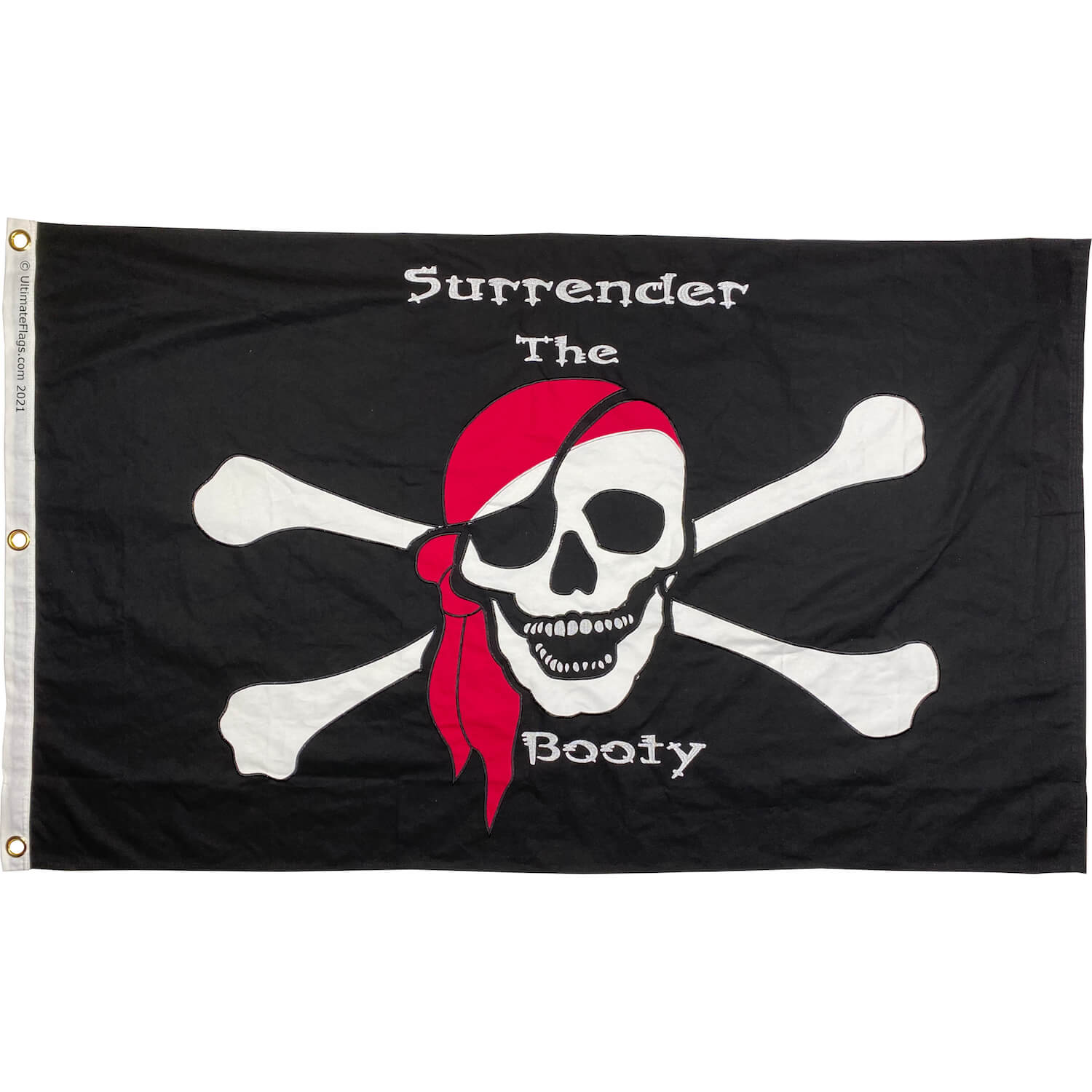
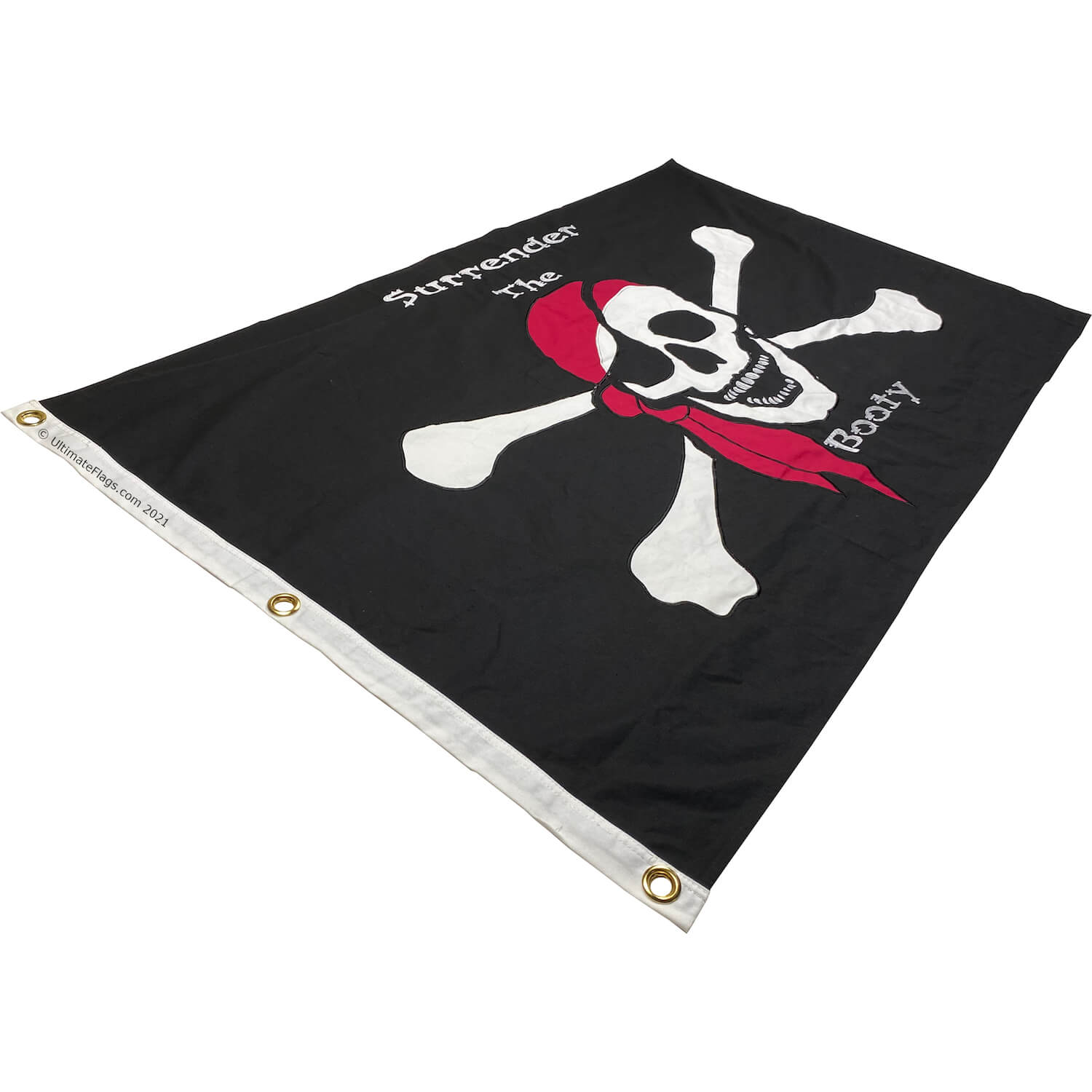
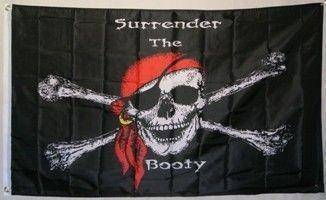
Pirate Surrender the Booty Flag 3 X 5 ft. Cotton Embroidered Flags
$69.95
In stock




Pirate Flag — “Surrender the Booty,” Cotton Authentic Embroidered, 3×5 Feet
Surrender the Booty has been making people laugh and making merchant captains sweat for three centuries. This premium cotton embroidered version of one of history’s most direct commercial propositions is built for the display settings where quality of construction actually matters — theatrical productions, museum installations, honor displays, and any setting where a printed polyester flag would look exactly like what it is. Cotton moves differently. Cotton photographs differently. Cotton feels like it belongs in a period-accurate setting in a way that synthetic materials simply cannot replicate.
The Commerce of Piracy — A Different Way of Looking at “Booty”
Every previous conversation about pirate booty defaults to treasure chests and Spanish gold. The more interesting story is the economic system that governed how booty was defined, valued, and distributed — a system so sophisticated and so genuinely innovative that economic historians have written serious academic papers about it.
The Golden Age of Piracy (1680–1730) coincided with the early development of modern capitalism in Europe and the Americas. The Dutch East India Company had pioneered the joint-stock model. Lloyd’s of London was developing marine insurance. Commodity markets were establishing standardized pricing for trade goods across the Atlantic economy. Pirates were operating — often unknowingly — within and against this emerging financial architecture, and their internal economic arrangements were in some respects more sophisticated than the systems they were disrupting.
The pirate prize system worked as follows: any vessel captured became a prize, its contents inventoried by the quartermaster and valued against current Caribbean market prices. This valuation was not arbitrary — pirates had detailed knowledge of what commodities fetched at which ports, which goods could be sold without attracting customs attention, and which prizes were worth keeping versus stripping and releasing. The quartermaster’s role was essentially that of a chief financial officer, responsible for accurate valuation, fair distribution, and the maintenance of the articles that governed the entire enterprise.
Booty in this context meant not just physical goods but the entire financial value of a capture — including the estimated ransom value of wealthy passengers, the market value of the vessel itself if it was worth taking as a prize, the recruitment value of skilled crew members who might volunteer to join, and the intelligence value of the captain’s knowledge of trade routes, naval patrol schedules, and upcoming shipments. A sophisticated pirate captain was making complex multi-variable financial calculations in real time during every encounter.
The Port Royal Booty Economy — Where It All Got Spent
Understanding what “surrender the booty” meant in practice requires understanding Port Royal, Jamaica — the city where most Caribbean Golden Age booty eventually ended up, and one of the most extraordinary urban environments in the history of the Americas.
Before its destruction in the catastrophic earthquake of June 7, 1692 — which killed approximately 2,000 people and sent two-thirds of the city sliding into Kingston Harbor in minutes — Port Royal was the commercial capital of English Caribbean piracy and one of the wealthiest cities per capita in the entire Atlantic world. Its waterfront was lined with taverns, gambling houses, goldsmiths, merchants, and fences who had developed elaborate systems for converting pirate booty into legitimate commercial goods and currency.
The goldsmiths of Port Royal were particularly important. Captured gold and silver — coins, plate, jewelry, raw bullion — needed to be melted, recast, and revalued before it could enter legitimate commerce. Port Royal’s goldsmiths performed this service at a premium and asked no questions, creating a conversion layer between the piracy economy and the legitimate Atlantic trade network that made the entire enterprise financially viable.
Sugar merchants performed a similar function for cargo goods — buying captured sugar, indigo, cotton, and manufactured goods at significant discounts and reselling them into the legitimate market. The city operated as a massive booty laundering operation that the English Crown largely tolerated because it generated tax revenue and provided informal naval protection for Jamaica against Spanish attack.
When the earthquake destroyed Port Royal in 1692, contemporary observers including Cotton Mather described it as divine punishment for the city’s wickedness. The pirates themselves simply relocated to Nassau.
Why Cotton Construction Matters for This Flag
The specific demand embedded in this flag — “Surrender the Booty” — appears in theatrical and dramatic contexts far more often than in outdoor display contexts, and the cotton embroidered construction is specifically optimized for those settings.
Film and television productions recreating the Golden Age of Piracy require flags that behave correctly on camera. Synthetic flags catch light differently than period-accurate materials, move artificially in studio air conditioning, and photograph with a flatness that trained eyes immediately recognize. Cotton drapes, moves, and catches light the way period flags actually did — which is why prop masters and costume departments consistently specify cotton for any production where historical accuracy will be scrutinized.
Museum installations face a different but related challenge. A printed synthetic flag displayed in a glass case next to period artifacts creates an immediate incongruity that undermines the installation’s credibility. Cotton embroidered construction sits alongside period objects with a visual coherence that synthetic alternatives cannot achieve.
Theatrical re-enactments — whether Golden Age piracy living history events, Gasparilla parade floats, or dedicated historical drama productions — benefit from the way cotton behaves in the air and responds to handling. It looks right because it is right.
Frequently Asked Questions & Little-Known Facts
Q: What was the most unusual item ever taken as pirate booty? Historical records contain some remarkable entries. Blackbeard once blockaded Charleston, South Carolina not for gold or silver but specifically for a medicine chest — a box of drugs and medical supplies that his crew desperately needed. Bartholomew Roberts ransomed an entire Portuguese treasure fleet primarily because it carried a surgeon he wanted to recruit. Henry Every’s capture of the Ganj-i-Sawai in 1695 yielded not only gold and silver but an extraordinary collection of jewels belonging to the Mughal Emperor’s granddaughter, who was reportedly aboard — items whose cultural and religious significance the pirates were entirely unequipped to appreciate or market.
Q: How did pirates fence stolen goods without being caught? Through a sophisticated network of complicit merchants, colonial officials, and port operators who had developed elaborate systems for laundering captured goods into legitimate trade. In Nassau and Port Royal, the infrastructure for converting piracy into commerce was essentially public knowledge — governors and customs officials participated in the profits and asked few questions. In New York and Boston, merchants known as “fence merchants” operated openly enough that their activities were documented in colonial court records. The system worked because it benefited too many people with too much influence to be easily dismantled.
Q: Why is cotton the right material for theatrical and museum display? Cotton was the primary fabric of the early 18th century maritime world — sails, clothing, flags, and rigging were all predominantly natural fiber materials. Its specific weight, drape, movement characteristics, and light response are calibrated by centuries of use in the environments where Golden Age flags actually flew. Synthetic materials replicate the visual appearance of cotton imperfectly and its physical behavior not at all — which is why productions and institutions requiring period accuracy consistently specify natural fiber construction.
Q: How much was a typical pirate’s share of booty worth in modern terms? This varies enormously by capture, but some benchmark figures are instructive. Bartholomew Roberts’ crew reportedly received approximately £50 per man from a single major capture — equivalent to roughly two to three years of honest maritime wages in 1720. Henry Every’s crew received an estimated £1,000 per man from the Ganj-i-Sawai capture — equivalent to several decades of legitimate wages delivered in a single afternoon. The potential upside explains why rational men made the apparently irrational choice of the pirate life.
Q: Is this flag appropriate for Gasparilla parade floats and tall ship displays? The cotton authentic embroidered construction is ideal for float and tall ship display where the flag will be prominently visible and where visual quality matters. Cotton’s natural drape and movement make it particularly striking on a moving float or vessel. For permanent outdoor installation in heavy weather, our double-ply embroidered nylon military quality version provides superior weatherproofing — but for event display where the flag will be handled and presented rather than permanently mounted, cotton delivers visual impact that nylon cannot match.
Premium Quality — Cotton Authentic Embroidered, 3×5 Feet
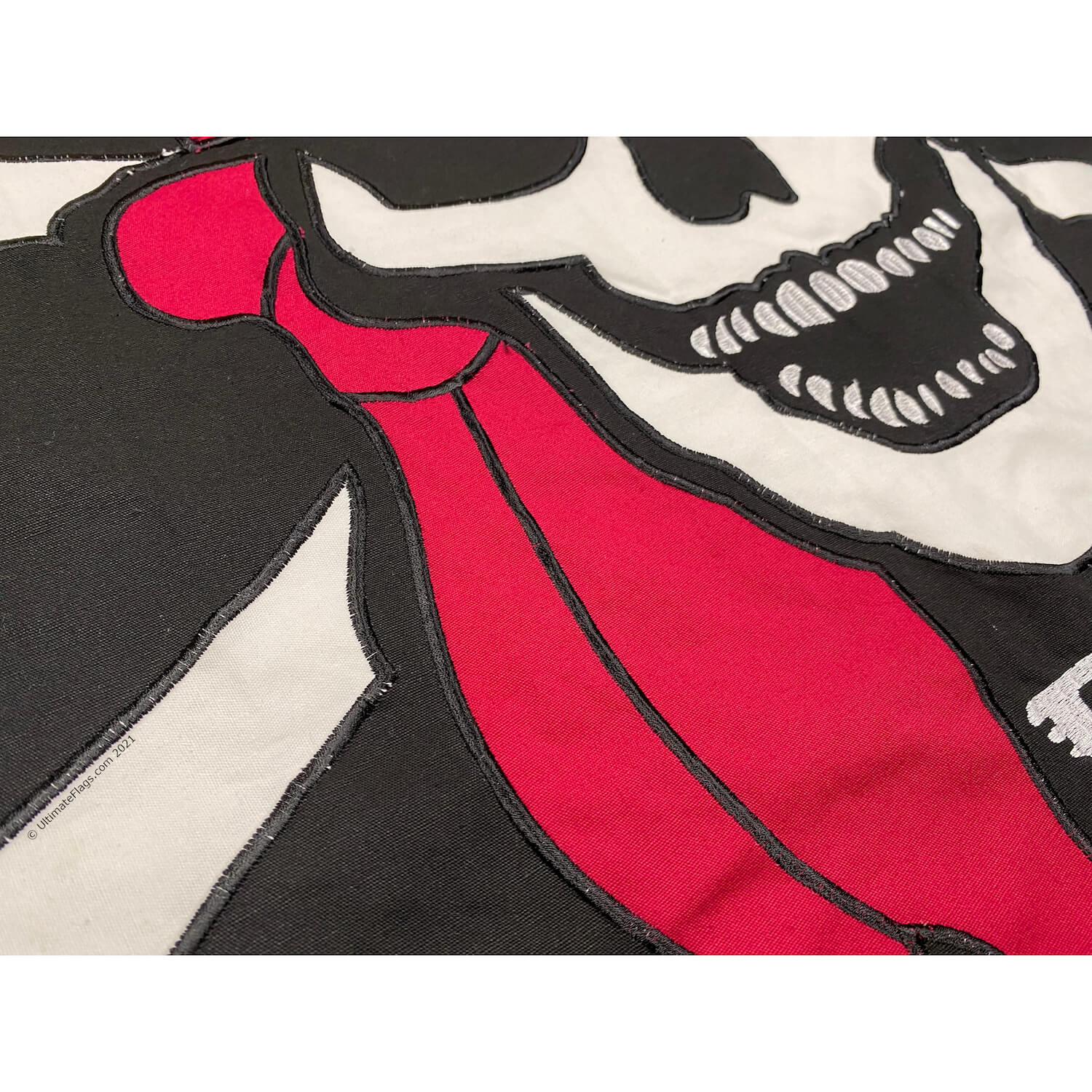
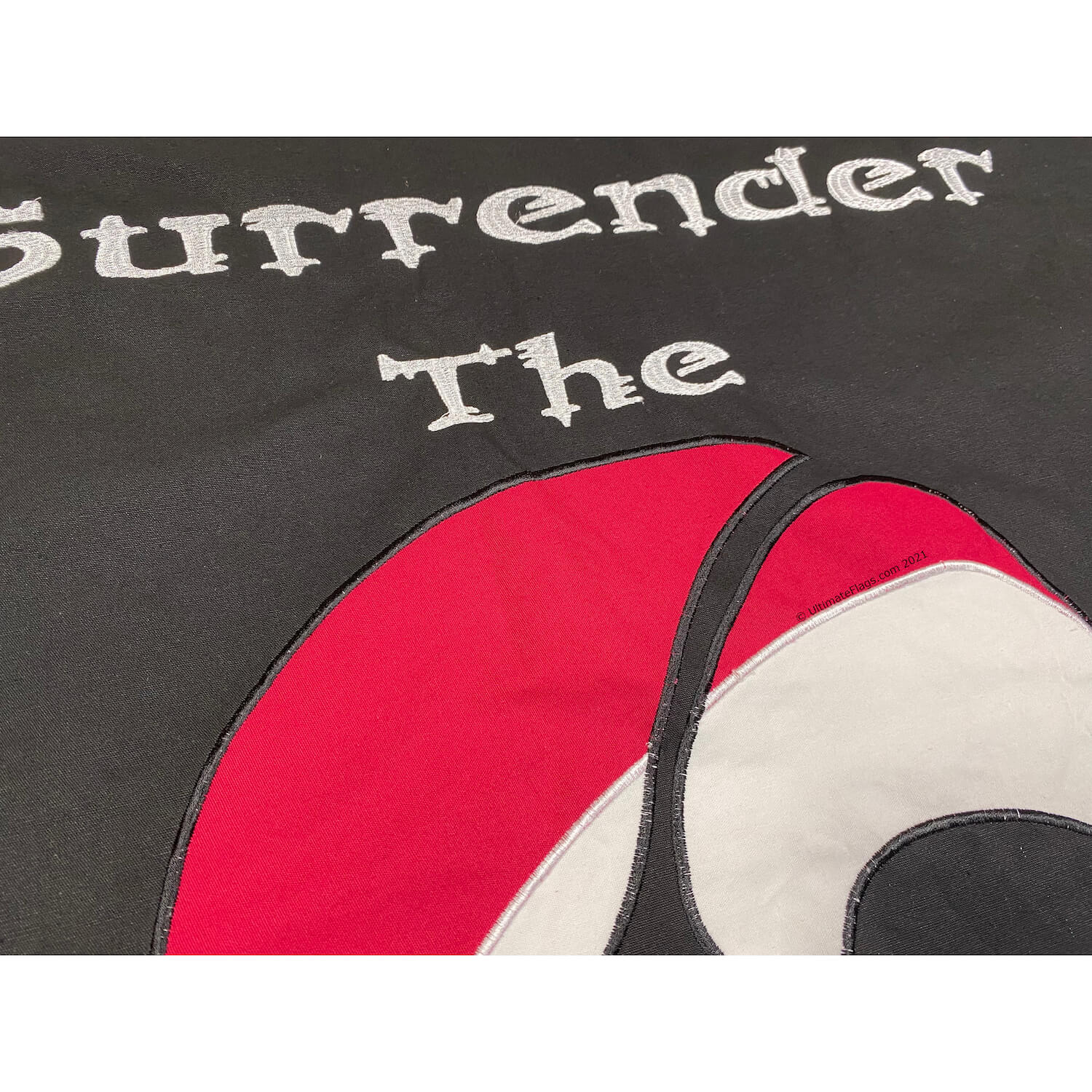
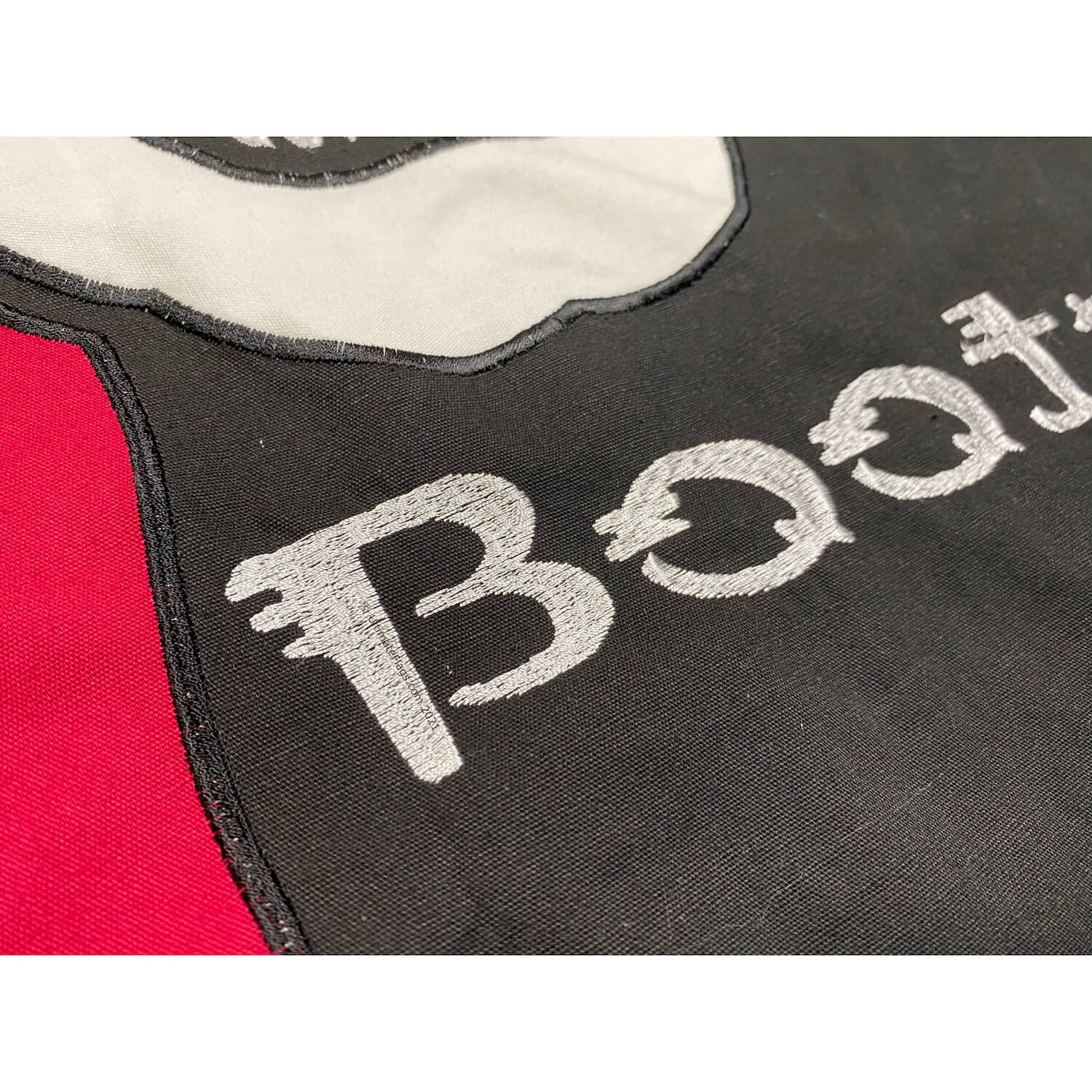
- Embroidered design — stitched directly into the fabric for superior visual depth, texture, and permanent color that printed flags cannot replicate
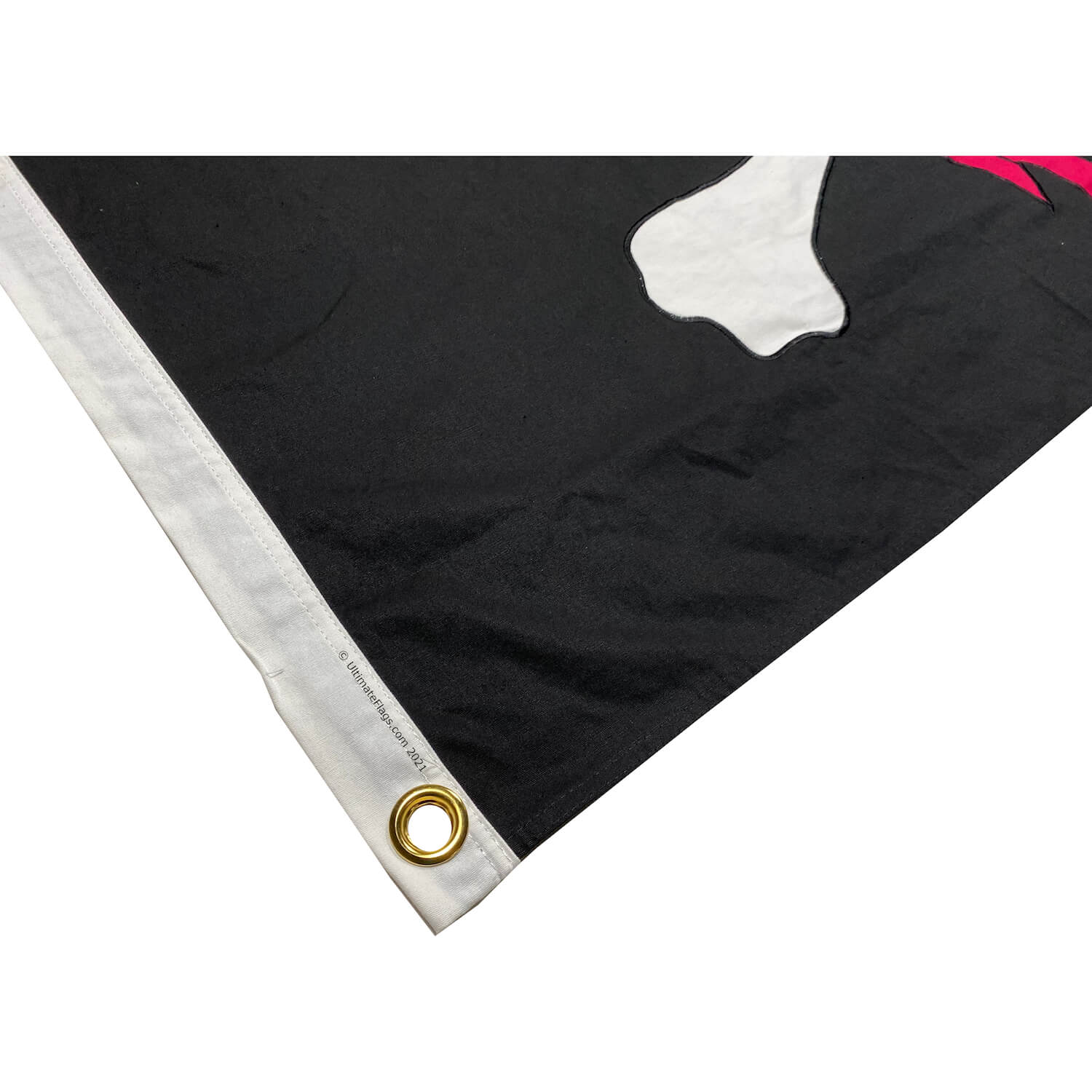
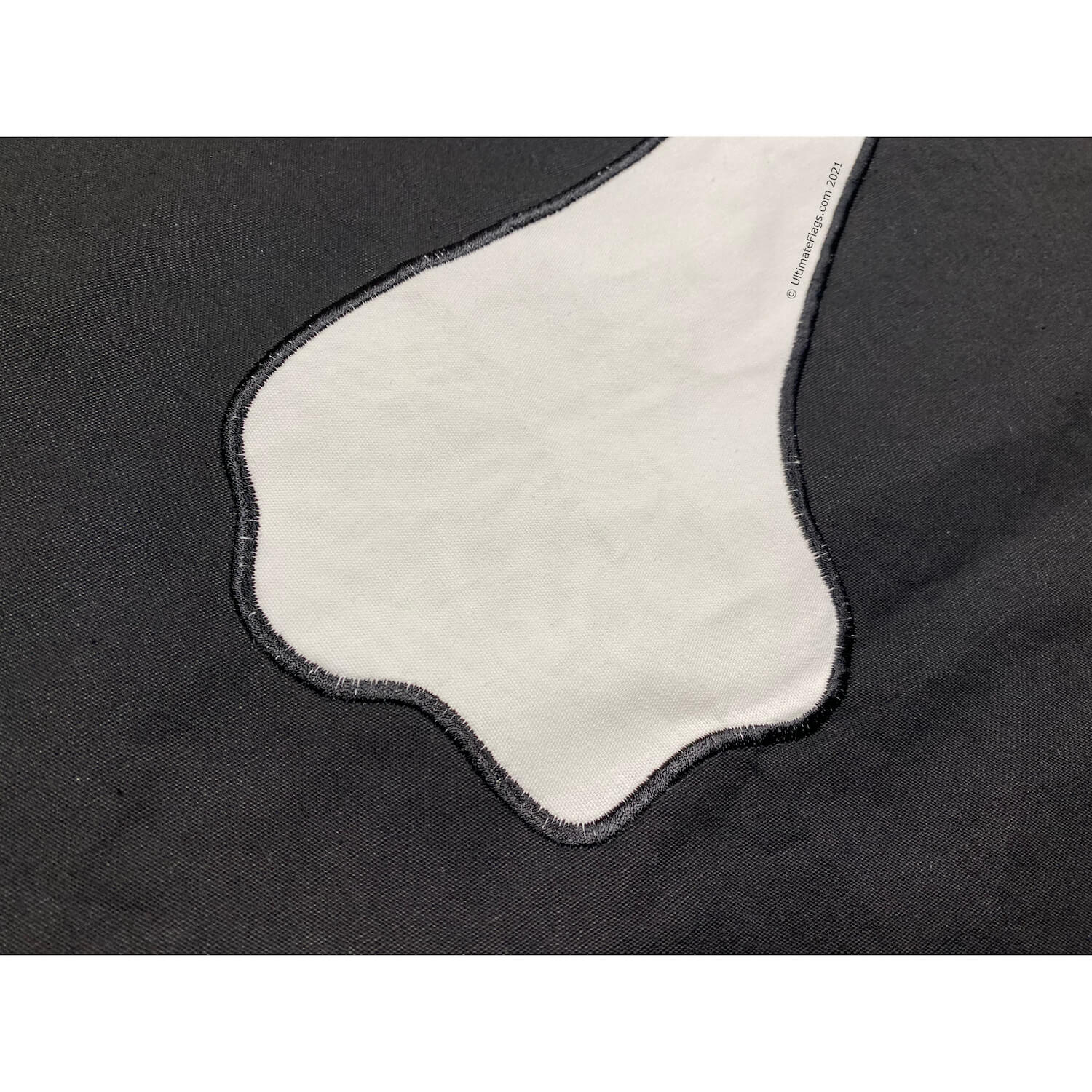
- Authentic cotton weave — looks, feels, drapes, and moves with the natural weight and character of period-accurate flag construction
- Full-textured and striking presentation ideal for theatrical, museum, and close-display settings
- Attaches easily to any standard flagpole or display mount
- Note: Cotton construction provides beautiful weight and drape but is not designed for permanent outdoor exposure or heavy weather. For outdoor installation see our nylon alternatives.
Recommended Uses
- Theatrical productions — film, television, and stage requiring period-accurate Golden Age piracy imagery
- Museum and historical installations
- Gasparilla Festival float and tall ship display
- Re-enactments and living history events
- Indoor honor displays and memorials
- Color guard and ceremonial presentations
- Collectors of premium quality pirate flag and maritime history memorabilia
Check out our full Collection of Pirate Flags
“At Ultimate Flags Inc., we are more than just a flag store; we are custodians of history, supporters of freedom, and believers in the power of symbols. Located in O’Brien, Florida, our family-owned business has been serving patriots, history enthusiasts, and flag collectors since 1997. We pride ourselves on offering an unparalleled selection of over 10,000 flags, including American flags, Confederate flags, military flags, historic flags, and custom designs. Each flag tells a story, and we are committed to preserving these narratives through our high-quality products.
Our passion for flags is matched only by our dedication to our customers. Whether you’re seeking a flag for personal expression, historical reenactments, or to honor your heritage, our experienced team is here to help you find the perfect flag. We understand the importance of quality, which is why we offer flags in various materials and sizes, suitable for all needs and occasions.
At Ultimate Flags, we believe in giving back. We actively support veterans, first responders, and non-profit organizations, ensuring that the brave men and women who serve our country are honored and remembered. Our online presence is not just about sales; it’s about educating our audience on the rich tapestry of American history and the significance of flags in our society.
Explore our vast collection in our online flag store and join us in celebrating the virtues, history, and ideas that shape our nation. For Patriots, Pride, & Freedom – Ultimate Flags Inc.”
SKU: C38D5F4-RU-FL3X5LC-851139
Description
Description
German Naval Jack — Weimar Republic Era (1921–1933), Iron Cross with German Canton, 3×5 Feet
A Rare Flag from Germany’s Most Turbulent Political Era
The German Naval Jack of 1921–1933 is one of the most historically fascinating and collectible flags of the 20th century — a design that bridges the end of the German Empire and the rise of the Third Reich, born entirely within the brief and turbulent years of the Weimar Republic. Featuring the timeless Iron Cross, the traditional black, white, and red imperial colors, and the German national flag in the canton, this jack captures a Germany torn between its imperial past and an uncertain democratic future.
History & Symbolism of the 1921–1933 German Naval Jack
The Weimar Republic (1919–1933) was established in the aftermath of Germany’s defeat in World War I and the abdication of Kaiser Wilhelm II in November 1918. The new democratic government faced an almost impossible task — governing a nation shattered by military defeat, crippled by the punishing Treaty of Versailles (1919), and bitterly divided between monarchists, republicans, communists, and early Nazi agitators.
One of the Weimar Republic’s most politically charged decisions was the question of national colors and flag identity. The new Republic adopted black, red, and gold as its official national colors — the colors of the liberal revolutionary movement of 1848 — replacing the black, white, and red of the German Empire. This decision was fiercely contested by German nationalists and monarchists, who viewed the new colors as a humiliating repudiation of imperial German heritage.
The German Naval Jack adopted in 1921 reflected this political compromise — incorporating the black, white, and red of the old imperial tradition alongside the new republican identity. Its design combined:
- The black, white, and red field — the colors of the Prussian and imperial German heraldic tradition, drawn from the arms of the Hohenzollern dynasty and the Hanseatic League, representing continuity with Germany’s pre-Weimar military and naval heritage
- A bold black Iron Cross (Eisernes Kreuz) centered on the flag — Germany’s most venerated military symbol, established in 1813 during the Napoleonic Wars and carried through the Franco-Prussian War and World War I as the nation’s premier decoration for battlefield valor
- The German national flag in the canton (upper hoist corner) — incorporating the black, red, and gold tricolor of the Weimar Republic, formally acknowledging the new democratic state’s authority while surrounding it with imperial colors that many in the German Navy still preferred
This design tension — republican colors in the canton, imperial colors dominating the field — perfectly encapsulates the fundamental instability of the Weimar Republic itself, which was perpetually caught between democratic legitimacy and the gravitational pull of its imperial past.
The flag was in use from 1921 until 1933, when Adolf Hitler’s appointment as Chancellor and the subsequent Nazi seizure of power (Machtergreifung) brought an end to the Weimar Republic and its flag designs. The black, red, and gold republican tricolor was abolished and replaced with the black, white, and red of the imperial era — and ultimately the swastika flag — as the Nazis deliberately reclaimed imperial German symbolism and rejected the Weimar democratic heritage entirely.
Frequently Asked Questions & Little-Known Facts
Q: Why did the Weimar Republic keep imperial colors in its naval jack? The German Navy (Reichsmarine) of the Weimar era was deeply conservative and largely monarchist in its officer culture — a reflection of the Imperial German Navy’s traditions and the class backgrounds of its officers. The retention of black, white, and red in the naval jack was a political concession to naval tradition and to the powerful nationalist factions within German society who refused to accept the republican colors as legitimate.
Q: What was the Weimar Republic and why did it fail? The Weimar Republic (1919–1933) was Germany’s first democratic government — established under enormous pressure following WWI defeat, burdened from birth by the “stab-in-the-back” myth promoted by German nationalists who falsely blamed civilian politicians for Germany’s military defeat. It survived multiple crises — the hyperinflation of 1923, multiple coup attempts including Hitler’s Beer Hall Putsch (1923), and the devastating Great Depression (1929) — before finally collapsing when President Paul von Hindenburg appointed Hitler as Chancellor in January 1933.
Q: What happened to the Weimar Republic’s black, red, and gold flag? Upon the Nazi seizure of power in 1933, the black, red, and gold tricolor was immediately abolished and replaced with the imperial black, white, and red — and then progressively with the swastika flag. The black, red, and gold was restored as Germany’s national flag following World War II and remains the flag of the Federal Republic of Germany today.
Q: What is the Iron Cross’s significance in this flag? The Iron Cross on this jack connects the Weimar Republic’s naval identity directly to 800 years of German military heritage — from the Teutonic Knights of the 13th century through the Napoleonic Wars, the Franco-Prussian War, and World War I. Its presence on a republican-era flag was a deliberate statement that the new Germany, whatever its political form, maintained continuity with the military traditions and sacrifices of the old.
Q: Is this flag associated with the Nazi regime? No — this flag was retired in 1933 when the Nazis came to power and abolished Weimar-era symbols. It is an exclusively Weimar Republic era design with no direct Nazi association, making it one of the more historically straightforward German flags of the early 20th century for collectors and historians.
Standard Quality — Super-Weave Polyester, 3×5 Feet
Our most popular quality level — durable, lightweight, and built to fly in even the lightest breeze.
- Through-dyed on both sides — design fully visible from either direction
- Bright, fade-resistant dye for lasting color in indoor and fair-weather outdoor use
- 100% synthetic super-weave polyester — lightweight, waterproof, and highly responsive in minimal wind
- Double-stitched edges on all sides for lasting durability
- Reinforced grommet holes with metal rings for secure, rust-free pole attachment
- Fits any standard flagpole or mounting system
Recommended Uses
- Weimar Republic and WWI-era reenactments and living history events
- Theatrical productions — film, television, and stage
- Indoor museum and historical displays
- Academic and educational exhibitions
- Collectors of Imperial German, Weimar Republic, and early 20th century German naval history
- Fair-weather outdoor display, events, and parades
Premium Quality Cotton Polehem Sewn Nazi Banner 3 x 5
See Nazi Germany Flag Collection Here.
Check out our entire WW2 Nazi Flag Collection Here.
We are adding more and more daily!
“At Ultimate Flags Inc., we are more than just a flag store; we are custodians of history, supporters of freedom, and believers in the power of symbols. Located in O’Brien, Florida, our family-owned business has been serving patriots, history enthusiasts, and flag collectors since 1997. We pride ourselves on offering an unparalleled selection of over 10,000 flags, including American flags, Confederate flags, military flags, historic flags, and custom designs. Each flag tells a story, and we are committed to preserving these narratives through our high-quality products.
Our passion for flags is matched only by our dedication to our customers. Whether you’re seeking a flag for personal expression, historical reenactments, or to honor your heritage, our experienced team is here to help you find the perfect flag. We understand the importance of quality, which is why we offer flags in various materials and sizes, suitable for all needs and occasions.
At Ultimate Flags, we believe in giving back. We actively support veterans, first responders, and non-profit organizations, ensuring that the brave men and women who serve our country are honored and remembered. Our online presence is not just about sales; it’s about educating our audience on the rich tapestry of American history and the significance of flags in our society.
Explore our vast collection in our online flag store and join us in celebrating the virtues, history, and ideas that shape our nation. For Patriots, Pride, & Freedom – Ultimate Flags Inc.”
SKU: C21D1F7-RU-FL3X5P-354-830363
Recently Viewed Flags
No reviews to show
 Unhappy With Your Product? We’ll Take It Back!